Author Archives: RFBF

Christmas and Christians in the Workplace: An Overview by Transform Work

7 Dec, 2025

As Christians prepare to celebrate Christmas, we welcome Ros Loaker, CEO of Transform Work, a charity that supports Christians in the Workplace, with connections to over 500 Christian Workplace groups and Christian professional networks.

Ros has lead Transform Work for nearly 20 years and will be sharing about what Transform Work does and will be sharing amazing stories from Christian groups in the workplace.

Join the UK Faith@Work Network at 1pm KU/8am ET for this 30-minute community call. Register here.

Entrepreneurial Approach to Advancing Religious Freedom

7 Dec, 2025

By Brian Grim

From Negative Narratives to Positive Entrepreneurship: A New Approach to Advancing Religious Freedom

Current global efforts to advance religious freedom often rely on a negative narrative, highlighting persecution and restrictions. While these issues are real and urgent, this approach has not reversed the trend: government restrictions on religion are at their highest level in the 14 years that Pew Research Center has tracked the issue. Even Pew discontinued the “Solutions” section of its annual report after 2013 (the last report I directed at Pew), signaling a lack of effective strategies.

Since founding the Religious Freedom & Business Foundation in 2014, I have championed a positive narrative, showing how religious freedom fosters innovation, inclusion, and economic growth. This approach has gained traction in the business world, yet not enough advocates have adopted similar strategies. To scale impact, we need a new paradigm: a Positive Entrepreneurial Approach.

It’s time to shift from seeing a world of problems to seeing a world of possibilities when it comes to religious freedom.


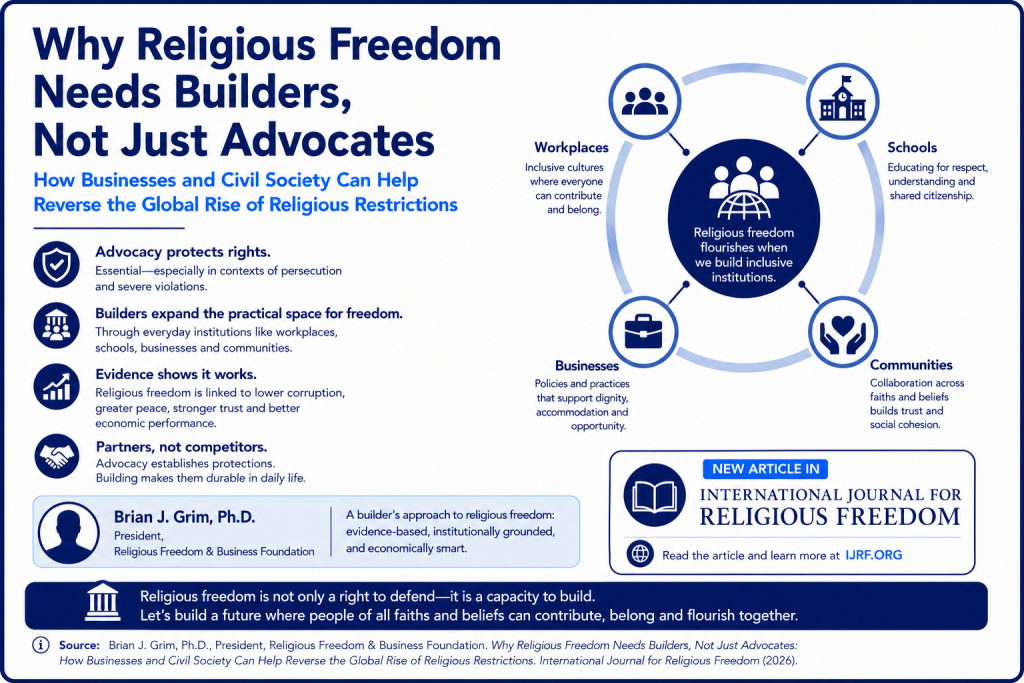
Advocates vs. Builders and Beyond

In his 2023 article, Advocates and builders, advancing religious freedom together, Chris Seiple distinguishes two main camps in religious freedom efforts:

Advocates work “outside-in,” raising awareness, naming and shaming regimes, and pressing governments through diplomatic pressure — often at the cost of lost access or nuanced engagement.

Builders operate “inside-out,” using quiet diplomacy to help governments improve systems and policies locally.

While both strategies can open space, a greater emphasis on showcasing the positive social, economic, and communal outcomes of religious freedom. That is where the Positive Entrepreneurial Approach that I am following breaks new ground, mobilizing communities and markets through constructive models, partnerships, and real-world benefits rather than just persuasion of governments.


The Concept

Entrepreneurship succeeds not by coercion but by creating value — building relationships, meeting needs, and empowering local leaders. I propose that we adopt entrepreneurial principles to advance religious freedom for all, not just to help those experiencing persecution, but to create flourishing societies where diverse faiths coexist and contribute.


 Five Principles for a Positive Entrepreneurial Approach

  1. Value Creation as the Core Driver
    Entrepreneurs succeed by creating tangible value. Similarly, advancing religious freedom should focus on delivering measurable benefits — such as innovation, inclusion, and economic growth — rather than abstract ideals. When stakeholders see clear returns, engagement becomes natural.


  2. Market-Based Solutions
    Entrepreneurship thrives on scalable models. We will design frameworks — like impact investment funds, multi-faith economy certifications, and inclusive business practices — that embed religious freedom into economic systems. These solutions make freedom a competitive advantage, not just a compliance checkbox.


  3. Innovation Through Including Multiple Perspectives
    Entrepreneurs leverage multiple perspectives for creativity. Religious freedom unlocks diverse perspectives, fueling innovation in products, services, and organizational culture. By showcasing case studies where multiple perspectives drive breakthroughs, we position freedom as a catalyst for progress.


  4. Scalable Partnerships and Ecosystems
    Successful ventures build ecosystems, not silos. We will foster cross-sector partnerships among businesses, investors, educators, and civil society to amplify impact. Toolkits, platforms, and collaborative networks will enable replication and growth across industries and regions.


  5. Data-Driven Storytelling and Proof of Impact
    Entrepreneurs attract support through evidence. We will combine compelling narratives with hard data—demonstrating how religious freedom correlates with economic resilience, talent retention, and social stability. This approach transforms advocacy into an investment-worthy proposition.


Why This Matters

This approach shifts the conversation from “stopping persecution” to “creating flourishing societies.” It makes religious freedom attractive, practical, and scalable—just as entrepreneurship succeeds by being relational, contextual, and empowering.


Economic Transformation Through Common Growth

A key feature of this approach is transforming the economy through a new model of business that places human relationships and religious freedom at its core. Leveraging the Multi-faith Common Growth Fund impact investment model being launched on the London Stock Exchange along with a Multi-Faith Economy Mark, this initiative will align capital with values—funding enterprises that foster inclusion, dignity, and interfaith collaboration. By embedding religious freedom into economic systems, we create sustainable growth that benefits all stakeholders, proving that freedom is not just a moral imperative but a driver of shared prosperity.


By socializing and normalizing this approach, we can transform religious freedom advocacy from reactive to proactive—making it a cornerstone of human flourishing worldwide.

Faith in Action: Visit to Our Lady of Mount Carmel Church, Hong Kong

7 Dec, 2025

Today, I had the privilege of visiting Our Lady of Mount Carmel Church in Hong Kong, a vibrant parish with a deep commitment to faith and service. The English Mass was presided over by Fr. Josekutty Matthew, from Kerala, India, and it was a joy to experience the warmth and devotion of this community.

During my visit, Fr. Thomas Law, the parish priest, shared powerful stories that reflect the heart of this congregation. He spoke about the courageous work of parishioners in Gaza, where two doctors from the church have volunteered to meet urgent and dire medical needs amid unimaginable hardship. Their willingness to serve in such a dangerous environment is a living testimony of faith expressed through action.

Fr. Law also highlighted a local initiative: the parish is raising funds to build a new church building to accommodate the growing number of worshippers in the diocese. The need is real, and the community responded generously with a second offering during Mass dedicated to this cause. It was inspiring to see how faith translates into tangible support for the future of the church.

In addition to these efforts, Fr. Law asked for continued prayers for the victims of the Wang Fuk Court fire, a recent tragedy that shook the city. The parish has already raised over $100,000 to help those affected, a remarkable example of solidarity and compassion in times of crisis.

As I left the church, I was struck by the profound sense of mission that animates this community. From global outreach in Gaza to local relief efforts and plans for growth, Our Lady of Mount Carmel Church embodies what it means to live faith in action. Their story reminds us that prayer and generosity can change lives — near and far.


Our Lady of Mount Carmel Church in Hong Kong is truly unique. Located in the bustling Wanchai district at 1 Star Street, this Roman Catholic parish is notable for being situated within a private multi-story residential building rather than as a standalone structure. Serving the local community with both Chinese and English services.

Its interior design is equally distinctive: a large skylight above the altar floods the sanctuary with natural light, while sparkling crystal beads hang down around a suspended golden cross, creating a breathtaking focal point. Behind the altar, a stunning mosaic of the Wedding at Cana by Mexican artist Francisco Borboa adds artistic depth and spiritual symbolism. Adding to this transcendent atmosphere, flowing water runs under glass from the altar to the baptismal font at the entrance, a beautiful reminder of life and renewal. Learn more here.

Building Freedom Bridges: Mekong Club Helps Business End Modern Slavery

7 Dec, 2025

By Brian Grim

It was great to reconnect with Matt and Sylvia Yu Friedman in Hong Kong. Matt is CEO of The Mekong Club, an organization that works tirelessly to support corporate members and partners in addressing modern slavery across countries and industries. I came away from our meeting with a renewed sense of the urgency of The Mekong Club’s work, a summary of which I’m thrilled to share below.


What if the products you sell or the services you deliver were linked to modern slavery — and you didn’t even know it? For millions of people trapped in forced labor and human trafficking, this isn’t a hypothetical. It’s reality. And for global businesses, the responsibility to act has never been greater.


Empowering Businesses to End Modern Slavery

Modern slavery is one of the most pressing human rights challenges of our time. From forced labor in supply chains to human trafficking across borders, millions remain trapped in exploitative conditions. For global businesses, addressing this issue is not only a moral imperative, it’s a strategic necessity. Consumers, investors, and regulators increasingly demand transparency and ethical practices. Companies that fail to act risk reputational damage and legal consequences.

That’s where The Mekong Club comes in. Based in Hong Kong, this pioneering organization partners with corporations to tackle modern slavery head-on. Founded by Matt Friedman, a leading voice in anti-trafficking efforts, The Mekong Club provides practical tools, training, and collaborative platforms that empower businesses to identify and eliminate slavery risks within their operations and supply chains.


What Makes The Mekong Club Unique?

Unlike many advocacy groups, The Mekong Club focuses on business-driven solutions. They understand that companies are uniquely positioned to influence change because of their reach and resources. Through their membership model, they bring together industry leaders to share best practices, develop innovative strategies, and create systemic impact.

Their approach includes:

  • – Risk Assessment Tools: Helping companies map vulnerabilities in their supply chains.
  • – Training Programs: Equipping employees with knowledge to spot and prevent exploitation.
  • – Industry Working Groups: Facilitating collaboration across sectors to address common challenges.
  • – Compliance Guidance: Supporting businesses in meeting international standards and legal requirements.

By combining expertise with actionable resources, The Mekong Club turns good intentions into measurable results.


Why Should Companies Engage?

Modern slavery is not confined to distant factories — it can lurk in any tier of a global supply chain. Partnering with The Mekong Club enables companies to:

  • – Protect brand reputation and build consumer trust.
  • – Ensure compliance with emerging regulations on human rights and due diligence.
  • – Contribute to a global movement that aligns business success with social responsibility.

As Matt Friedman often emphasizes, “Businesses are not the problem — they are the solution.” By leveraging their influence, companies can help dismantle systems of exploitation and create pathways to freedom for millions.


Call-to-Action

If your organization is committed to ethical practices and sustainability, The Mekong Club is an invaluable partner. Visit here to learn more about their mission and explore membership opportunities. Together, we can transform industries, protect human dignity, and make modern slavery a thing of the past.

Advancing Religious Freedom Through Mercy, Technology & Business for Good

6 Dec, 2025

Building Bridges of Freedom: How Tzu Chi’s Mercy, Technology, and Business for Good Transform Lives

By Brian Grim 葛百彦 (read on LinkedIn)

Religious freedom is not just a legal principle—it’s a lived reality that flourishes when compassion and innovation intersect. The Tzu Chi Foundation exemplifies this truth by blending mercy, technology, and ethical business practices to serve humanity. Their work demonstrates that advancing human dignity is the surest path to advancing freedom of belief.

Mercy and Love in Action

At the heart of Tzu Chi’s mission is mercy and love. From disaster relief to medical outreach, their volunteers embody compassion without boundaries. When earthquakes strike or floods devastate communities, Tzu Chi responds swiftly, offering aid without regard to race, religion, or nationality. This approach transcends ideological divides, creating trust and solidarity among diverse communities. By prioritizing human need over dogma, Tzu Chi fosters environments where freedom of belief is respected and celebrated—a powerful antidote to polarization.

Technology for Humanity

Innovation is not just about progress—it’s about purpose. Tzu Chi leverages technology to deliver aid efficiently, develop eco-friendly solutions, and provide telemedicine to underserved regions. Their recycling initiatives transform waste into resources, while digital platforms connect volunteers worldwide. These advancements reflect a commitment to human dignity, ensuring that no one is excluded because of geography or circumstance. In doing so, technology becomes a tool for inclusion, reinforcing the principle that every life matters.

See more at the Religious Freedom & Business Foundation‘s post on the Da Ai Technologies initiative.

Business for Good

Tzu Chi’s social enterprises prove that commerce can be a force for good. By promoting ethical practices and sustainability, they challenge the notion that profit must come at the expense of people or planet. Their businesses fund charitable programs, empower communities, and reduce inequality. This model nurtures a culture where values—not just value—drive decisions, inspiring others to align economic success with social responsibility.


Call-to-Action:

If this vision inspires you, join the conversation! Share your thoughts on how compassion and innovation can advance freedom worldwide. Follow my work on LinkedIn and explore Tzu Chi’s initiatives to see how you can make a difference. Together, we can build a world where dignity and belief go hand in hand.

Balancing FoRB and gender non-discrimination in the workplace

26 Nov, 2025

By Brian Grim, Ph.D.

On November 26, I shared the following thought on balancing freedom of religion or belief (FoRB) and gender non-discrimination in the workplace. This was part of a virtual session for the European Commission on Freedom of Religion or Belief (FoRB) and non-discrimination in the workplace. The session is organized by the OSCE Office for Democratic Institutions and Human Rights (ODIHR).


1. Adopt Clear, Inclusive Policies

Equal Employment Opportunity (EEO): Ensure your policies explicitly prohibit discrimination based on any ground such as sex, race, color, ethnic or social origin, genetic features, language, religion or belief, political or any other opinion, membership of a national minority, property, birth, disability, age or sexual orientation.

Religious Accommodation Policy: Include guidelines for reasonable accommodations (e.g., flexible scheduling for religious observances, dress code adjustments, diet, etc.).


2. Foster a Culture of Respect

Training & Awareness: Provide regular training on religious diversity and gender inclusion. Emphasize that respect for differences is a core value.

Employee Resource Groups (ERGs): Support ERGs for faith-based groups and women’s groups to promote dialogue and mutual understanding.


3. Implement a Structured Accommodation Process

Interactive Dialogue: When an employee requests accommodation (religious or gender-related), engage in a collaborative process to find reasonable solutions.

Consistency: Apply accommodations fairly and consistently to avoid perceptions of favoritism or bias.


4. Avoid Coercion or Hostility

Proselytizing or Harassment: Make clear that employees can share beliefs respectfully but cannot pressure others or create a hostile environment.

Safe Reporting Channels: Provide confidential ways to report concerns without fear of retaliation.


5. Align with Legal Standards

Title VII (U.S.): Requires reasonable accommodation for religious practices unless it causes undue hardship.

Article 21 (Europe): Article 21 of the EU Charter of Fundamental Rights prohibits any form of discrimination.

Gender Non-Discrimination Laws: Comply with local and national laws protecting gender and expression.


6. Promote Dialogue and Education

Interfaith & Inclusion Events: Host voluntary sessions that celebrate and educate employees on different perspectives.

Conflict Resolution Mechanisms: Train managers to mediate when religious and gender rights intersect.


7. Leadership Commitment

Top-Down Support: Leaders should model respect for both religious freedom and gender equality.

Communicate Values: Reinforce that inclusion is not about choosing one right over another, but honoring both.


Added resource: Track and benchmark progress using our Faith-Friendly Workplace REDI Index.


Nominations Open: Global Business & Interfaith Peace Award

24 Nov, 2025

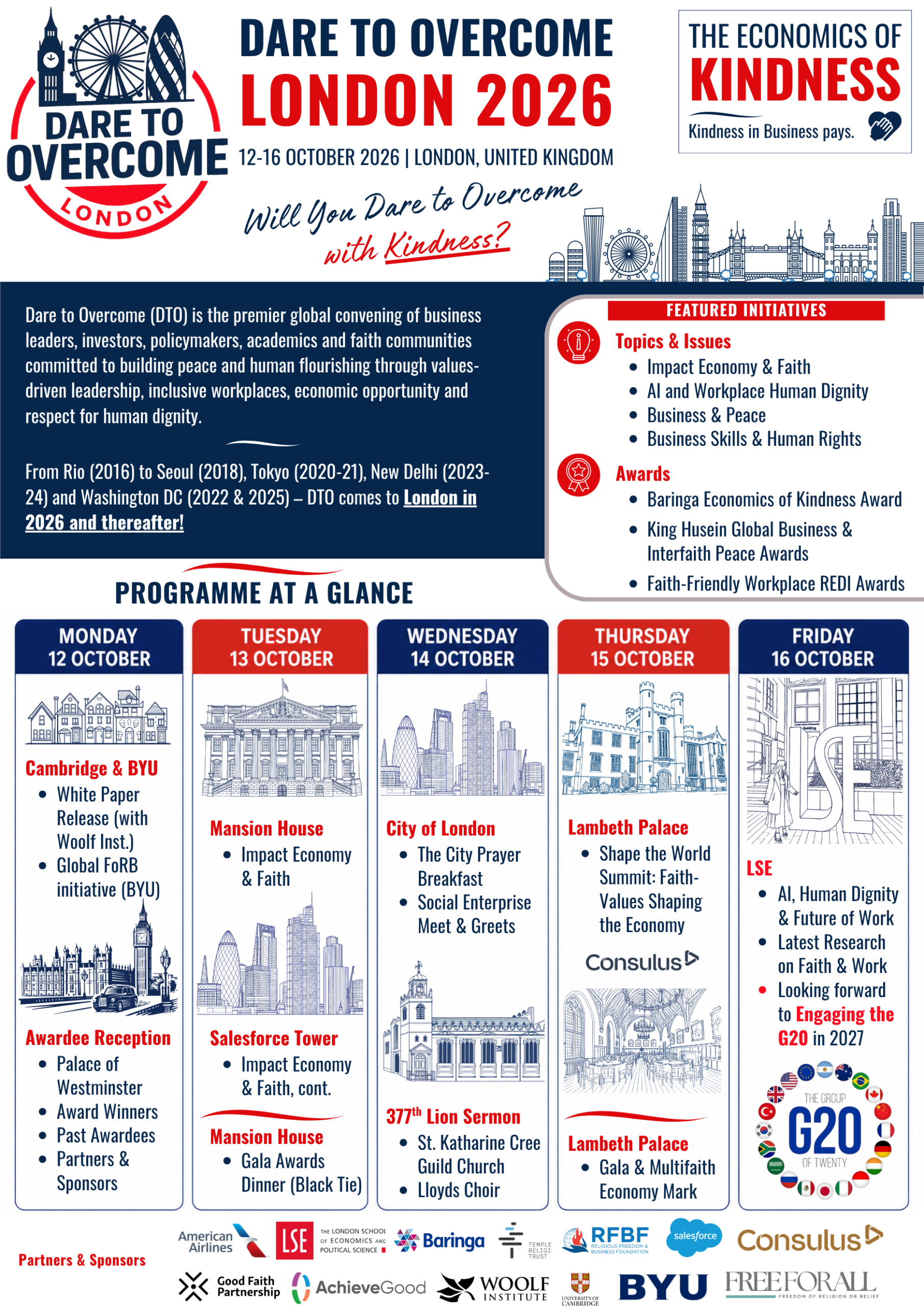
Nominations for the 2026 Awards will be in London.

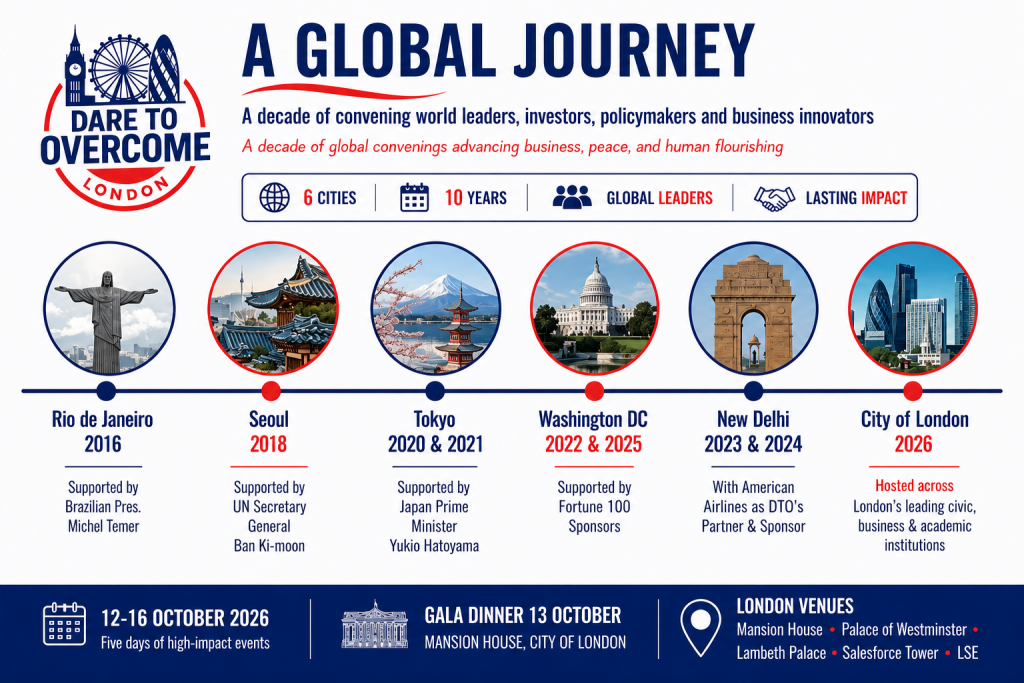
History: The Global Business & Interfaith Peace Awards have been given since 2016. They were originally awarded in tandem with the Paralympic Games as part of former UN Secretary General Ban Ki-moon’s UN Global Compact Business for Peace initiative in Rio de Janeiro (2016), Seoul (2018) and Tokyo (2021).

They were then given in Washington DC and in New Delhi in 2023 in tandem with the G20 Meetings hosted by India, supported by our founding patron King Husein and global partner American Airlines.

India hosted the awards in 2023 and 2024 as part of Dare to Overcome-Global. In 2025, the Awards were back again in Washington DC. The 2026 Awards will be in London.

FoRB and non-discrimination in the workplace

24 Nov, 2025

By Brian Grim

On November 26, I’ll be part of a virtual session for the European Commission on Freedom of Religion or Belief (FoRB) and non-discrimination in the workplace. The session is organized by the OSCE Office for Democratic Institutions and Human Rights (ODIHR).

Exploring Freedom of Religion or Belief (FoRB) and Non-Discrimination in Today’s Workplace

As workplaces become increasingly diverse, the intersection of Freedom of Religion or Belief (FoRB) and non-discrimination is one of the most pressing issues for employers and employees alike. At our upcoming session, we’ll dive into these complex questions, exploring both challenges and opportunities.


I’ll begin by tackling a question that often arises: Does promoting FoRB in the workplace risk creating obstacles for women’s rights? Some argue that religious accommodations could unintentionally reinforce gender-based job segregation. I’ll share insights on how organizations can safeguard women’s rights while respecting religious freedom, ensuring that accommodations do not perpetuate inequality.

Another key area I’ll address is proselytism in the workplace. Should employees be empowered to talk about their faith at work? While open expression can foster inclusion, it can also make colleagues uncomfortable if boundaries aren’t clear. I’ll outline practical strategies for organizations to encourage respectful dialogue without crossing into coercion.

Finally, I’ll explore one of the most sensitive questions: When should religious accommodations override an employer’s other commitments to creating a workplace where all feel welcome? I’ll propose criteria organizations can use to evaluate religious objections—such as those related to participation in Pride events or pronoun usage—while balancing strategic goals and anti-discrimination policies. Should consistency be the guiding principle, or should flexibility prevail? I’ll share why a nuanced, case-by-case approach often works best.


The conference will also feature discussions on several critical issues:

FoRB and Women’s Rights: How can workplaces create space for religious expression without undermining gender equality?

Managing Complaints: If an employee feels pressured to convert or participate in religious activities, what steps should managers take before it escalates into a formal complaint?

Global Conflicts and Workplace Cohesion: With emotionally charged events—such as the conflict in the Middle East—impacting employees, how can employers protect Muslim and Jewish staff from rising hate incidents while maintaining workplace harmony?

Limits of Expression: When does legitimate expression of political or religious views cross the line into hate speech or incitement?

FoRB and LGBTIQ Rights: How can employers design anti-discrimination policies that protect vulnerable groups without unduly limiting sincere religious or non-religious expression?

Opportunities Beyond Challenges: What unique strengths and insights do religious employees bring to the workplace, and how can organizations leverage these to build a better, more inclusive environment?


This conference promises to be a thought-provoking dialogue on how businesses can uphold freedom of belief while fostering respect for all employees. Stay tuned for key takeaways and actionable strategies that will help organizations navigate these complex issues.

Faith-based Perspectives on Technology

24 Nov, 2025

By Brian Grim, Ph.D.

In an era of rapid technological advancement, the ethical and moral implications of innovation have become increasingly significant. At the “Technology for Goodness” Forum in Hong Kong, I will explore this theme through the lens of faith-based traditions, focusing on how religious worldviews shape the development, application, and governance of technology. Drawing on both Dharma traditions (Hinduism, Buddhism, Jainism, Sikhism) and Abrahamic faiths (Judaism, Christianity, Islam), my presentation compares and contrasts their perspectives on technology’s role in human flourishing, ethical boundaries, and spiritual responsibility.

Dharma traditions emphasize harmony, karma, and the interconnectedness of life, often advocating for technologies that promote balance and reduce suffering. Abrahamic traditions, rooted in stewardship, justice, and divine purpose, stress the importance of using technology to serve humanity while remaining accountable to God.

I will identify key ethical concerns. These include surveillance, AI autonomy, environmental degradation, and digital inequality. It discusses how faith-based principles can guide responsible innovation. Ultimately, I argue that religious ethics offer a vital framework for ensuring that technology serves the common good, respects human dignity, and fosters a more compassionate and just society.

In today’s world, we are faced with a host of interconnected and complex challenges: extreme disasters driven by climate change, persistent inequality in the distribution of resources, worsening humanitarian crises, and ethical dilemmas arising from the rapid advancement of artificial intelligence and digital technologies. These “wicked problems” can no longer be addressed effectively by any single sector or organization alone. Instead, they demand integrated, cross-disciplinary thinking and collaborative solutions.

As an international humanitarian organization grounded in the core value of altruism, the Tzu Chi Foundation draws its founding principles from the compassion of Buddhist teachings and puts altruism into practice throughout society. Master Cheng Yen, the founder, has called on professionals from all walks of life to join in advancing humanitarian care and social ethics.

“Technology for Goodness” emphasizes the integration of care, empathy, and ethical considerations into the application of technology. Whether in disaster response, healthcare, equitable education, or environmental sustainability, using technology ethically and for goodness of society is a vital pathway for fostering cross-sector collaboration and addressing the pressing challenges facing humanity.

The 10th Tzu Chi Forum, themed “Technology for Goodness,” explores how we can harmonize humanistic values with modern technology and promote interdisciplinary collaboration. The forum seeks pathways to balance technological advancement with human-centered care, and to develop innovative solutions rooted in altruism and common goodness. By advancing ethical technology, social welfare, and sustainable development, the forum aims to address the world’s most complex challenges.

For those in Hong Kong, register here.

Upcoming Travels and Events

24 Nov, 2025

By Brian Grim

In the coming months, I’ll be participating in some milestone events as well as laying the groundwork for new global initiatives and partnerships. You can see the details below. I look forward to seeing some of you along the way!

This week before U.S. Thanksgiving holidays, I’ll be part of a virtual session for the European Commission on Freedom of Religion or Belief-FoRB and non-discrimination in the workplace. The session is organized by the OSCE Office for Democratic Institutions and Human Rights. I’ll also participate in the Faithforce Light Talks series during champion month for the global Faithforce community at Salesforce.

During the first week of December, I’ll be in Taiwan and Hong Kong to speak on “Faith-based Perspectives on Technology.” I’ll be hosted by the world’s largest Buddhist charity, Tzu Chi. Drawing on both Dharma traditions (Hinduism, Buddhism, Jainism, Sikhism) and Abrahamic faiths (Judaism, Christianity, Islam), my presentation compares and contrasts their perspectives on technology’s role in human flourishing, ethical boundaries, and spiritual responsibility.

On December 9th, I’ll be at American Airlines headquarters in Dallas to give the keynote at the 30th anniversary celebration for their Christian Employee Business Resource Group. It’s been an honor to work with Chief Flight Dispatcher, Fr. Greg McBrayer, who is the global lead for the CEBRG, as well as working with all of their faith-based EBRGs. I’m especially grateful to have American Airlines as the official airline for our U.S. and international Dare to Overcome conferences, including in India.

I’ll be back in India early next year to help promote our Business Skills & Human Rights high school curriculum as a project that India-based companies can support as part of their CSR initiatives. In mid-December, Robert Rex who volunteers with our foundation, will be laying additional groundwork for this when he visits our partner in the project, the MIT World Peace University in Pune.

And I’m extremely excited to announce that our next Global Business & Interfaith Peace Awards will be October 13, 2026, in the City of London. If you know any business CEOs who are championing interfaith understanding, religious freedom and peace in their company, philanthropy or advocacy, please consider nominating them.

The Global Business & Interfaith Peace Awards are now named in honor of our patron, philanthropist and business leader King Husein, who will be on hand to congratulate the new honorees.