Working for workplace religious belonging, inclusion & freedom

E-NEWS ACTION DONATE

World Cup Highlights Struggles & Contributions of Afro-Brazilians

18 Jul, 2014
July 18, 2014 – Melissa E. Grim, Religious Freedom & Business Foundation Case Study*

446235Afro Brazilians Help Brazilian Economy

In Brazil where religious freedom is generally well-protected, Brazilians of African descent still face discrimination for their appearance and beliefs, including their religious beliefs. But an NGO, the Afro-Brazilian Incubator, is working to fight this discrimination by promoting entrepreneurship among Afro-Brazilians. The hope is that greater economic integration for Afro-Brazilians will lead to greater social and religious acceptance for them as well.

First brought to Brazil hundreds of years ago as slaves, Afro-Brazilians have long faced great discrimination, based on race, religion and other factors. Their plight gained prominence during the run up to the recent World Cup (which was hosted by Brazil), when many of the country’s leading black soccer players were subjected to racial and other harassment. These incidents caused Brazil’s president to declare the 2014 World Cup the “anti-racism World Cup.”

In an effort to fight the discrimination faced by Afro-Brazilians and those who practice Afro-religions,
the Incubator offers a host of free services for aspiring entrepreneurs, ranging from management training to assistance with marketing and accounting. It currently supports over 1,000 businesses in the metropolitan area of Rio de Janeiro, and works in partnership with the United Nations Development Program (UNDP).

Many newly successful businesspeople credit the Afro-Brazilian Incubator with their success. Nildilene, for instance, was able to use business advice and management skills provided by the Incubator to help create a food service business that now employs nine other people. The fact that she came from a poor family and was only able to finish elementary school did not stand in the way of her becoming a successful businesswoman.


img018

* This is the fourth in a series of case studies highlighting how companies – in their core business activities – can help reduce religious and cultural tensions, increase social understanding, and promote peace. This case study does not imply an endorsement of these companies or their products or services. The Religious Freedom & Business Foundation has no tie to the companies profiled.

To stay up to date, subscribe to our newsletter.


Indonesian Businesses Open Their Doors to Faith and Action

17 Jul, 2014
July 17, 2014 – Melissa E. Grim, Religious Freedom & Business Foundation Case Study*
In Indonesia, businesses are at the forefront of efforts to promote interfaith understanding. For instance, EXPRESS Taxi, with a fleet of more than 7,000 taxis in Jakarta, promotes a faith-friendly workplace by setting up prayer rooms and facilitating Muslim and Christian observances as well as celebrations of Chinese New Year. Such efforts not only foster interfaith understanding but also increase worker productivity and satisfaction.

In addition to accommodating religious practice in the workplace, Indonesian businesses also help meet the social and religious needs of employees outside of work, while at the same time increasing safety and employee retention. For instance, PT Kereta API Indonesia, an Indonesian railway company, provides free freight transportation for its Muslim workers to return home to celebrate Eid. This is important because many would choose the more affordable but dangerous option of riding a motorcycle home. In addition to being safer, it relieves congestion across the island of Java and lowers overall accident rates.

PT XL-Axiata, a mobile telephone company, also arranges free transportation home for religious observance. In cooperation with Giant Hypermarket, the company last year helped nearly 20,000 employees and customers return home for Eid.

7462364_orig

Muslims Breaking Fast at Express Taxi
9966954_orig

Christmas Celebration at Express Taxi

899644

In addition to offering logistical help with their employees’ religious observances, businesses in Indonesia have worked to fix large, seemingly intractable social problems. For instance, companies in Jakarta, along with civil society groups and the government, helped 4,541 poor couples in interfaith marriages to receive the proper marriage licenses. Up to that point, these couples, for financial or legal reasons, could not obtain marriage certificates, preventing them from receiving birth certificates for their children. Without ID cards, marriage certificates and birth certificates, the families often did not have access to national health care, public education, legal rights and employment.

Having the necessary certificates, the businesses can further help them with the education scholarship, skills training and job opportunities.

The House of Love Foundation, in collaboration with the Jakarta Municipal Government as well as other groups, established and ran the marriage initiative. The initiative was also supported by Indonesia Global Compact Network and a variety of businesses, including  Rajawali’s B Channel (now Rajawali TV), Coca-Cola, Sari Roti, So Nice Sausage, Kopi Kamu, Papa Ron and religious organizations. Muslim, Christian, Catholic, Buddhist, Hindu and Confucius couples from across the capital took part. This initiative also promotes intercultural and interfaith understanding within the community.


img018

* This is the fifth in a series of case studies highlighting how companies – in their core business activities – can help reduce religious and cultural tensions, increase social understanding, and promote peace. This case study does not imply an endorsement of any company profiled. The Religious Freedom & Business Foundation has no tie to any of the companies profiled.

To stay up to date, subscribe to our newsletter.

Religious Freedom & Business at U.S. Capital

10 Jul, 2014
On July 8, 2014, Religious Freedom & Business Foundation research associate Melissa Grim gave the following report of the Foundation’s activities at the International Religious Freedom Roundtable.

2480718

Thank you for the opportunity to share about the work of the Religious Freedom & Business Foundation. The Foundation educates the global business community about how religious freedom is good for business, and engages the business community in joining forces with government and non-government organizations in promoting respect for freedom of religion or belief.

I would like to talk about 5 initiatives that the Foundation is working on. The first relates to Impact Investment, which is investing in sustainable businesses that have a positive social impact in ways that lower religious tensions and increase interfaith understanding. As part of this initiative, the Foundation will develop a global impact database based on the technology of the World Religion Databasebased at Boston University. The “Global Impact Investment Database” will link entrepreneurs and innovators with sustainable business opportunities in areas of social need around the world. The database will be state-of-the-art and built on the technology of the World Religion Database. The database will foster such enterprises as the waste-to-wealth project for Dalits, being developed with university, aid and development partners from Finland. Brazilian business partners are working with the Foundation to develop the web interface, include mechanisms for paid businesses memberships, which we believe will make the project self-sustaining and revenue-generating.

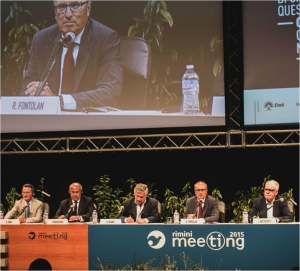
The second is the Business, Faith & Freedom Global Forum starting at the World Expo in Milan in 2015. “Feeding the Planet, Energy for Life” – presents a perfect platform for companies in food-related industries to showcase how religion and religious freedom makes their businesses more successful, innovative and responsive to the needs of people. The Global Forum will showcase sustainable enterprises that help ethnic & religious minorities better integrate and contribute to the societies in which they live.

Third, the Foundation will present the Religious Freedom & Business Global Awards in the host city of each summer and winter Olympics, beginning in Rio, 2016. The Global Awards recognize the best advances and innovations by businesses in improving respect for religious freedom. For-profit businesses from any country eligible to be nominated. Award winners will direct the Award prize money to a religious freedom organization of their choice from a list of those helping to educate the global business community about how religious freedom is good for business and/or engaging the business community in joining forces with government and non-government organizations in promoting respect for freedom of religion or belief.

Fourth, the Foundation is involved in Research and Education projects. President Grim along with researchers at Georgetown University and Brigham young published the study: “Is Religious Freedom Good for Business?: A Conceptual and Empirical Analysis,” which is available on the website of the Interdisciplinary Journal of Research on Religion (IJRR). The study finds that Religious freedom is one of only three factors significantly associated with global economic growth. The study looked at GDP growth for 173 countries in 2011 and controlled for two-dozen different financial, social, and regulatory influences. The study, however, goes beyond simple correlations by empirically testing and finding the tandem effects of government restrictions on religion and social hostilities involving religion (as measured by the Pew Research Center) to be detrimental to economic growth while controlling for 23 other theoretical, economic, political, social, and demographic factors.

Finally, the Foundation has a number of Education projects in development. It is working with leading business schools and educational institutions to develop an internet-based certificate course on how business, freedom and religion interact. Components of the future course include two tracks – one for corporate executives and representatives, and another for undergraduate and graduate students. There will be multi-media modules covering facts on topics ranging from religious freedom and its relation to socio-economic outcomes to case studiesof core business enterprises that promote interfaith understanding and peace.

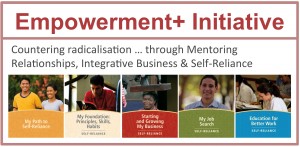
Additionally the Foundation is working with leading interfaith groups, business schools and educational institutions to develop a “Self-Reliance Curriculum.” Obtaining self-reliance life skills is a pressing need among many vulnerable communities who are susceptible to radicalization, such as Muslims in the UK. The project will make available to interfaith training teams a curriculum of self-reliance that could be taught to members of vulnerable communities by interfaith teams beginning in the UK and then taken globally.

The Foundation is the first organization dedicated to educating businesses about why religious freedom will enable them to be more productive and successful, and how they can effectively incorporate religious freedom in their strategic business plans for the benefit of their stakeholders, their employees and society.

Journal for the Scientific Study of Religion Reviews Johnson & Grim book

25 Jun, 2014
Anne Goujon, Research Group Leader, Wittgenstein Center for Demography and Global Human Capitol, Vienne Austria, writing in the Journal for the Scientific Study of Religion gave a positive review of Grim’s bookThe World’s Religions in Figures: An Introduction to International Religious Demography, co-authored with Todd Johnson.

1403711960

Goujon writes the book is “a must read for one interested in the field of international religious demography.” The review states that in the 21st century “(w)within which religion is an omnipresent factor, international religious demography has become the key provider of scientific knowledge relevant for a debate ‘driven by anecdotes and conjectures’” and “the book is one of the first important bricks in the wall of studies about international religious demography.” The review notes that one of the merits of the book is that it takes a truly global perspective towards religious populations, instead of maintaining a European or North American approach. Additionally the statistical section “considers the entire population, including the unaffiliated, irrespective of whether they are agnostic, atheists, or simply do not identify with the religious institutions in place.”

The book is now available for purchase.

Coke Serves Up Love and Peace with Small World Machines

21 Jun, 2014

by Melissa Grim

Last year, Coke brought some laughter and joy to a region that has seen more than its share of conflict when it installed two Small World Machines in New Delhi, India, and Lahore, Pakistan.

Long separated by a border that has seen a number of wars and religiously charged rhetoric, ordinary Indians and Pakistanis were able to use the machines’ live video feeds and large 3D touch screens to speak to and even “touch” the person on the other side.

As a three-minute advertisement by Coca-Cola shows, suspicions dropped away as people from opposite sides of the border who had never met exchanged peace signs, touched hands, and even danced together. (Coke’s YouTube video has over 4.3 million views.)

The idea came about as Coke, which already has a strong market share in India, was looking to increase sales in Pakistan. But instead of addressing both nations as separate markets, the company decided to treat the two countries as one after its teams on the ground said that Indians and Pakistanis were open to more dialogue and communication. This ultimately led to the Small World Machines and the coming together of people of different faiths divided by a history of mistrust and violence

The project required months of extensive cooperation between company teams in India and Pakistan who, ironically, only met “in person” when the Small World Machines went live. Technological issues and even security threats caused delays. But in March 2013, the machines went live in two popular shopping malls, allowing over 100 participants to meet and interact with someone on the other side of one of the most heavily guarded borders in the world.

Coca-Cola’s global creative director said the idea behind the campaign was about “creating stories around shared experiences” in a way that “goes back to the roots of Coke as a brand that started at a soda fountain – itself a communal experience.” With this goal in mind, Coca-Cola asked ad agency Leo Burnett to find “new, open-hearted ways for people to come together, while highlighting the power of happiness.” Thinking of a way to show the positive role a brand can play in society, the Leo Burnett agency developed the idea of the Small World Machines. However, the technology did not yet exist for web camera communication where people at one machine could interact with those at another as if they were merely separated by a piece of glass. This led Leo Burnett to create innovative new technology that simulates this in-person experience.

While some have been skeptical that Coca-Cola’s campaign will have any long-term impact on relations between India and Pakistan, the company believes the campaign is a step in the right direction. Coke also plans to bring the Small World Machines to other nations to help bridge other conflicts. Jackie Jantos, Coke’s Global Creative Director, said that the positive reaction to the campaign shows that listening to the market’s desire for increased positivity and connectivity was the right move. “It was wonderful to have our teams validate that this was the time for this message,” she said, adding: “Waving hello to someone in a land that is not so far away, but feels like it, was amazing.”,

* This is the first in a series of case studies highlighting how companies – in their core business activities – can help reduce religious and cultural tensions, increase social understanding, and promote peace. This case study does not imply an endorsement of Coca-Cola or it’s products. The Religious Freedom & Business Foundation has no tie to the Coca-Cola company.

To stay up to date, subscribe to our Newsletter!

Oxford Journal of Law and Religion Summer Academy

17 Jun, 2014
The Second Annual Oxford Journal of Law and Religion Summer Academy will be held 23-28 June 2014 at St. Hugh’s College, Oxford. The summer academy is a major international event that brings together leading academics, policy makers, international officials, and practicing lawyers working in the field of law, religion, and international relations.

751283

Brian Grim and Pasquale Annicchino will be speaking at the event titled Sacred and Secular Varieties of Secularism and International Religious Freedom from the Perspectives of Comparative Law, International Law and Foreign Policy.

Annicchino will speak on 23 June 17, 2014, presenting his article “Is the European Union Joining the International Religious Freedom Bandwagon?” under the panel of Religion and Foreign Policy – Emerging Trends. He will also chair a panel June 24 on International Law and Foreign Affairs – European Perspectives. Annicchino will be representing the European University Institute, Florence.

Grim will speak on 25 June, presenting his journal article “Religious Freedom’s Link to Economic Growth,” under the panel of Religion, Business and Foreign Policy. Grim represents the Religious Freedom & Business Foundation.

Full program here.

Foundation President Appointed to World Economic Forum Religion Council

16 Jun, 2014

PRESS RELEASE: June 16Klaus Schwab, Founder and Executive Chairman of the World Economic Forum, has invited Religious Freedom & Business Foundation President Brian Grim to become a Member of the World Economic Forum’s Global Agenda Council on the Role of Faith for 2014-2016. (See Grim’s articles at the Global Agenda Council.)

The focus of the Global Agenda Council on the Role of Faith in the upcoming term will be to raise awareness of the unique added value of faith by identifying and developing the main pillars of an informational program on how to leverage socio-cultural, cross-faith and religious engagement for conflict prevention and conflict transformation.

This effort will be targeted to two sets of stakeholders:

(1) Countries/public authority (e.g., countries experiencing recent phenomena of immigration; countries with internal conflicts and/or restrictions on freedom of beliefs/religion); and

(2) International companies and professionals, particularly those working in emerging markets and conflict affected regions.

Established in 2008, the Network of Global Agenda Councils is an invitation-only knowledge network that serves as an international brain trust to the World Economic Forum and the world at large.The Network gives its Members a unique platform to support the Forum’s vision to better understand and catalyze global, regional and industry transformation.

The Religious Freedom & Business Foundation and IGE Formalize Partnership

12 Jun, 2014
Washington, DC – (June 12, 2014) On 6 June 2014, Presidents and Seiple of the Religious Freedom & Business Foundation (RFBF) and the Institute for Global Engagement (IGE) signed a Memorandum of Understanding (MOU) formalizing the partnership between the two like-minded organizations that seek to build religious freedom worldwide.

5850777Grim & Seiple

“In line with the RFBF’s mission to ‘engage the business community in joining forces with government and non-government organizations in promoting respect for freedom of religion or belief’, IGE’s “track 1.5” approach, working at the nexus of governments and grassroots organizations, will complement the efforts of the RFBF. Having worked alongside Seiple and IGE for many years now, I am excited to see the fruit of our official partnership,” noted Grim.  

In order to enhance the breadth of both institutions and discover new synergies and efficiencies, IGE and RFBF agreed to work together in good faith to expand existing programs and initiatives as well as create new ones. Potential areas of collaboration include, but are not limited to: A certificate program on international religious freedom promotion and socially responsible global business, offered in conjunction with one or more respected business schools; special issues of The Review of Faith & International Affairs (RFIA) on select themes; and, film documentaries of success stories of businesses that have made a difference for religious freedom.

“I greatly respect the work of my colleague and friend, Brian Grim. I look forward to deepening our working relationship through this MOU. Our organizations share a commitment to freedom of conscience or belief and track record of practical and mutually reinforcing innovation in this field,” commented Seiple following the signing of the MOU.  

Formalizing such a partnership is a natural extension of existing synergies. Grim and the RFBF provide the quantitative metrics while Seiple and IGE provide the qualitative experiences. In addition to the formal partnership between the two institutions, Dr. Seiple also serves on Dr. Grim’s Board of Directors. Grim is a member of the Religion and Foreign Policy Working Group, through the Federal Advisory Committee initiated by Secretary Clinton, of which Dr. Seiple serves as Senior Advisor. Grim was also recently invited to join the World Economic Forum’s Council on the Role of Faith where Dr. Seiple serves as Chair.

British Parliament: Briefing on Religious Freedom’s Link to Economic Growth June 10

4 Jun, 2014
British Parliament, London, June 10, 2014 – Today,Religious Freedom & Business Foundation President Brian Grim discussed a new study finding that religious freedom is one of only three factors significantly associated with global economic growth.

1402462515Grim at UK Parliament

The study, by researchers at Georgetown University and Brigham Young University, looked at GDP growth for 173 countries in 2011 and controlled for two-dozen different financial, social, and regulatory influences.

The briefing was open to Members of Parliament and the public. Lord Alton of Liverpool hosted the event at 11:00 AM, Committee Room 3A. The briefing follows the June 9 launch of the new website of the All-Party Parliamentary Group (APPG) on International Religious Freedom.

Brian J. Grim is an author of the study, President of the RF&B Foundationand researcher on the economics working group of Georgetown University’s Religious Freedom Project. Grim is also a member of the World Economic Forum’s Global Agenda Council on the Role of Faith for 2014-2016.

Religious Freedom Linked to Economic Growth, Finds Global Study

29 May, 2014
Washington, D.C., May 29, 2014 – Religious freedom is one of only three factors significantly associated with global economic growth, according to a new study by researchers at Georgetown University and Brigham Young University. The study looked at GDP growth for 173 countries in 2011 and controlled for two-dozen different financial, social, and regulatory influences.

British Parliamentary briefing on the study on June 10!

As the world navigates away from years of poor economic performance, religious freedom may be an unrecognized asset to economic recovery and growth, according to this new study. The study examines and finds a positive relationship between religious freedom and ten of the twelve pillars of global competitiveness, as measured by the World Economic Forum’s Global Competitiveness Index (see example in chart).

The study, however, goes beyond simple correlations by empirically testing and finding the tandem effects of government restrictions on religion and social hostilities involving religion (as measured by the Pew Research Center) to be detrimental to economic growth while controlling for 23 other theoretical, economic, political, social, and demographic factors.

The new study also furthers previous work in the field, including 
The Price of Freedom Denied 
(by Brian Grim & Roger Finke, Cambridge, 2011). Grim & Finke’s research showed that religious freedom is a key ingredient to peace and stability, as measured by the absence of violent religious persecution and conflict. This is particularly important for business because where stability exists, there is more opportunity to invest and conduct normal and predictable business operations, especially in emerging and new markets.

The new study observes that religious hostilities and restrictions create climates that can drive away local and foreign investment, undermine sustainable development, and disrupt huge sectors of economies. Such has occurred in the ongoing cycle of religious regulation and hostilities in Egypt, which has adversely affected the tourism industry, among other sectors. Perhaps most significant for future economic growth, the study notes that young entrepreneurs are pushed to take their talents elsewhere due to the instability associated with high and rising religious restrictions and hostilities.

Religious freedom when respected within a company can also directly benefit the bottom line. This includes both improved morale and lower costs. For instance, the clothing retailer Abercrombie & Fitch fought and lost a religious discrimination case in 2013 related to firing a Muslim stock girl for wearing a scarf in violation of the company’s dress code. The case resulted not only in substantial legal costs but also in negative national publicity.

Moreover, freedom of religion or belief is a human right protected in numerous treaties and agreements, including the UN’s Universal Declaration of Human Rights. The study suggests that businesses may gain a competitive advantage by meeting the expectations of stakeholders who are increasingly demanding that companies play a positive role in addressing issues of social concern and fairness.

The study’s findings are timely given the rising tide of restrictions on religious freedom documented by Pew Research, showing that 76% of the world’s people currently live with high religious restrictions or hostilities. And the findings are especially relevant because the research shows that the largest markets for potential growth are in countries where religious freedom is highly restricted – casting a question mark over the long-term sustainability of growth in countries such as China. (See The Weekly Number for more on China.)

  • The full report, “Is Religious Freedom Good for Business?: A Conceptual and Empirical Analysis,” is available on the website of the Interdisciplinary Journal of Research on Religion (IJRR). The authors of the study are Brian J. Grim, Georgetown University’s Berkley Center for Religion, Peace & World Affairs, and Greg Clark and Robert Edward Snyder, Brigham Young University’s International Center for Law and Religion Studies. 

For related content see: Seven Reasons Why Religious Freedom is Good for Business


7732061

The Religious Freedom & Business Foundation is a non-partisan, not-for-profit organization working globally to show how religious freedom is good for sustainable business and innovation. The Foundation educates the global business community about how religious freedom is good for business, and engages the business community in joining forces with government and non-government organizations in promoting respect for freedom of religion or belief. It does not take positions on political debates.


Media inquiries, contact Melissa Grim, 410-268-7809, melissa@religiousfreedomandbusiness.org

Stay up to date with the Foundation’s Newsletter.