“Religion and Public Schools: A First Amendment Guide” is an updated version of U.S. guidelines developed by experts at the Freedom Forum. The new edition answers 23 frequently asked questions about religion and public schools with concise statements of current law.
Updated Resource: Religion and Public Schools
New Resource: Women’s Right to Freedom of Religion at Work
22 Jan, 2025
New Resource: “Employment: The Right to Freedom of Thought, Conscience, Religion or Belief of Women at Work” is a new explainer that offers OSCE participating States, businesspeople, unions, civil society organisations and religious or belief groups practical recommendations to ensure respect for, and protection of women’s right to Freedom of Religion or Belief (FoRB) in employment.
Corporate Responsibility and International Religious Freedom
21 Jan, 2025
Join RFBF’s Brian Grim for “Corporate Responsibility in the International Religious Freedom (IRF) Space: Challenges and Opportunities,” a panel discussion on Tuesday, 4th February, 3:30pm, at the IRF Summit in Washington DC, with Fr. Greg McBrayer (American Airlines) and Simon Billenness (No Business With Genocide).
Business Benefits of Religious Inclusion
19 Jan, 2025
By Brian Grim
“From Ford to Walmart, some big companies dialed back diversity efforts as activists pressed. Under the next Trump administration, the pressure will grow,” observes a recent WSJ article. In this environment, it is all the more important to demonstrate how freedom of religion and belief in the workplace is not just a diversity issue, it is a bottom line business benefit.
Forbes’ Chief Impact Officer Seth Cohen and I recently had a conversation on the business benefits of faith-friendly workplaces at the NASDAQ MarketSite in New York. You can share your views here by commenting on the video about how you business leaders can leverage faith in the workplace to drive innovation and collaboration.
Three keys to loving your neighbor in a multibelief world
19 Jan, 2025
“I have found that to engage the world, you have to have a soft heart, a hard head and ready hands.”
RFBF Board member, Chris Seiple, argues that the way to overcome division, discord and deceit is by loving your neighbor. Easier said than done.
“While there are people of faith (and no faith at all) who stand ready to partner in taking on our most pressing challenges, they are not quite sure how,” says Chris, “particularly when the task at hand requires them to work with someone who does not look, vote or pray as they do.”
Chris provides three keys to loving your neighbor in a multibelief world: having a soft heart, a hard head, and ready hands.
Overcoming Polarization: A Fast from Media?
18 Jan, 2025
A Music Fast Changed My Life—A Media Fast Might Heal Yours
Fasting from Media
65% say they always or often feel exhausted when thinking about politics according to Pew Research. Fasting from Media can revive us.
Research shows massive numbers of people are trapped in partisan echo chambers. Social and partisan media reinforce bias and polarization by providing a diet of repetitive refrains with limited depth and breadth that limit our spirituality and minds.
In a new article, I trace how a 10-month fast from music changed my life. I suggest that a media fast — be it 10 hours, 10 days or 10 months — can not only open up the creative voices that are in your soul, it can cure exhaustion and curb anger.
Incivility costs business $2.7 billion DAILY
16 Dec, 2024
Antidote to incivility: Tap virtues that faith reinforces
At the start of 2024, SHRM launched the Civility Index to gauge the current climate of civility across the U.S. This pulse report is part of a continuous effort to track and understand trends in civility within U.S. society and workplaces.
The Index found that incivility carries a hefty price tag for businesses—and it’s getting pricier. According to SHRM, in Q4 2024 the collective daily loss by U.S. organizations is more than $2.7 billion from reduced productivity and absenteeism due to incivility. If that level continues, it would add up to nearly $1 trillion annually ($989 billion).
This is a staggering cost, but the Q4 finding is particularly alarming because it represents an average daily increase of nearly $600 million compared to Q3.
A largely untapped antidote to this rising tide of incivility is to openly tap virtues that faith reinforces.
A useful definition of virtue come from the Vatican’s Catechism, which in paraphrase states that a virtue is an habitual and firm disposition to do the good. It allows people not only to perform good acts, but to give the best of themselves. Virtuous people tend toward the good with all their sensory and spiritual powers; they pursue the good and chooses it in concrete actions.
This definition draws on this scriptural admonition: “Whatever is true, whatever is honorable, whatever is just, whatever is pure, whatever is lovely, whatever is gracious, if there is any excellence, if there is anything worthy of praise, think about these things” (Philippians 4:8).
Andrew Abela, dean of the Busch School of Business at The Catholic University of America, is perhaps the leading thinker on the topic of virtue and business. Realizing that many “check their faith at the door” when they enter the workplace and that this incongruity is a widespread phenomenon, not just confined to Catholics, he asks, “How can we live a unified life, a life of integrity – where our faith and our work are fully integrated?”
He suggests that the answer lies in the concept of “virtue” – simply put – good habits, with the opposite being a vice, a bad habit. Things like lying, cheating, stealing and gossiping are bad habits, or vices, while being kind and being trustworthy are good habits, or virtues.
But, he asks, “What is the connection of virtue to religion?” From a religious point of view, people are created in God’s image, and therefore, living by the dictates of God to not lie, cheat, steal, and so on are not only harmful to others but also harmful to ourselves. The good news, according to Abela, is that virtues can be practiced, and as such, become our operating system. And the more we practice them, they become a habit.
The good news is that virtues can be practiced whether one is religious or not, but religion provides not only extra incentives to live up to the ideal (e.g., approval of God), but also resources that reinforce the habits (e.g., prayer, meditation, accountability to a congregation).
For more, see his keynote at our first Dare to Overcome Faith@Work conference:
Advancing Human Rights and Business Skills Education in India
16 Dec, 2024
Dare to Overcome 2024 Roundtable Discussion: Advancing Human Rights and Business Skills Education
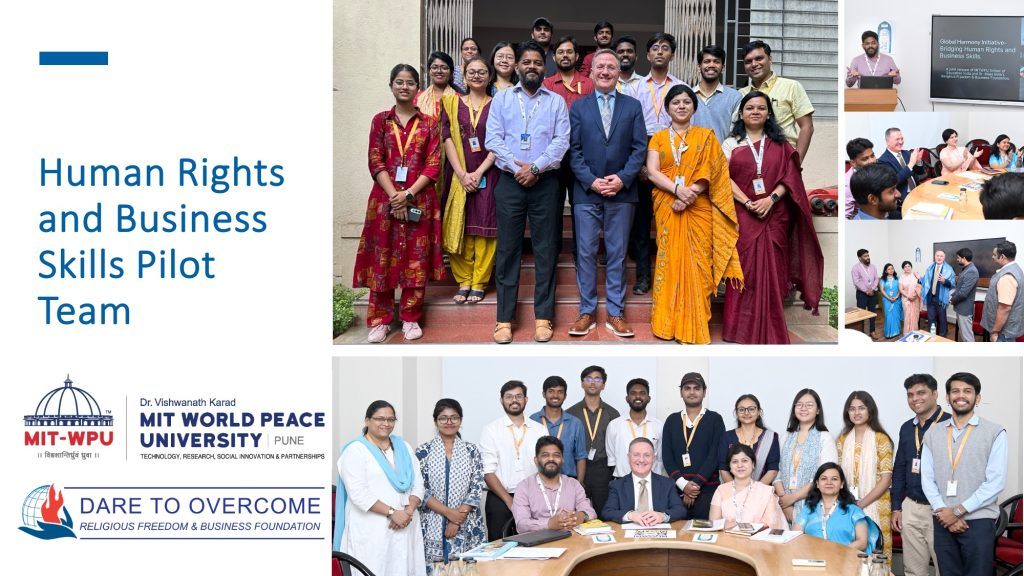
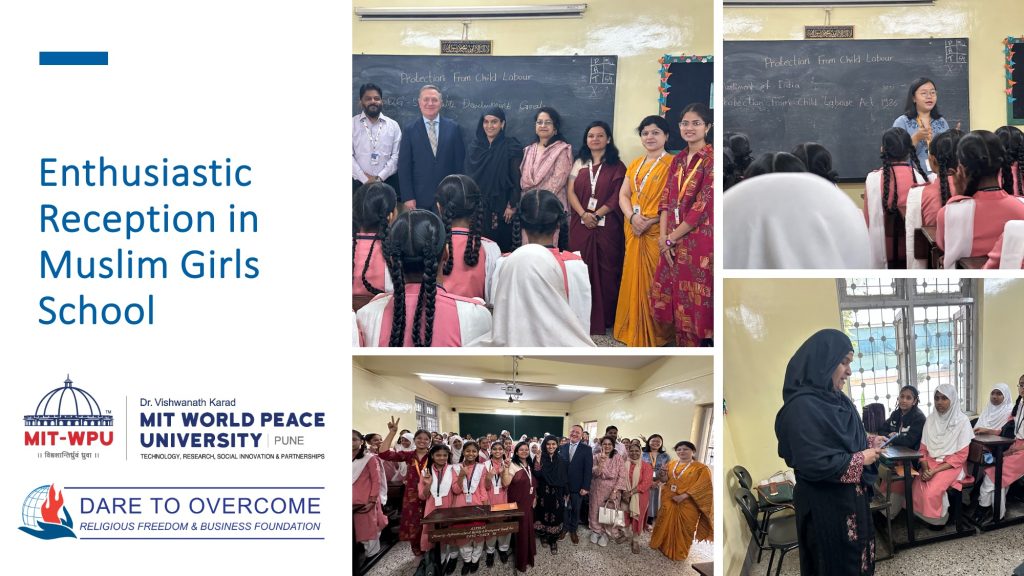
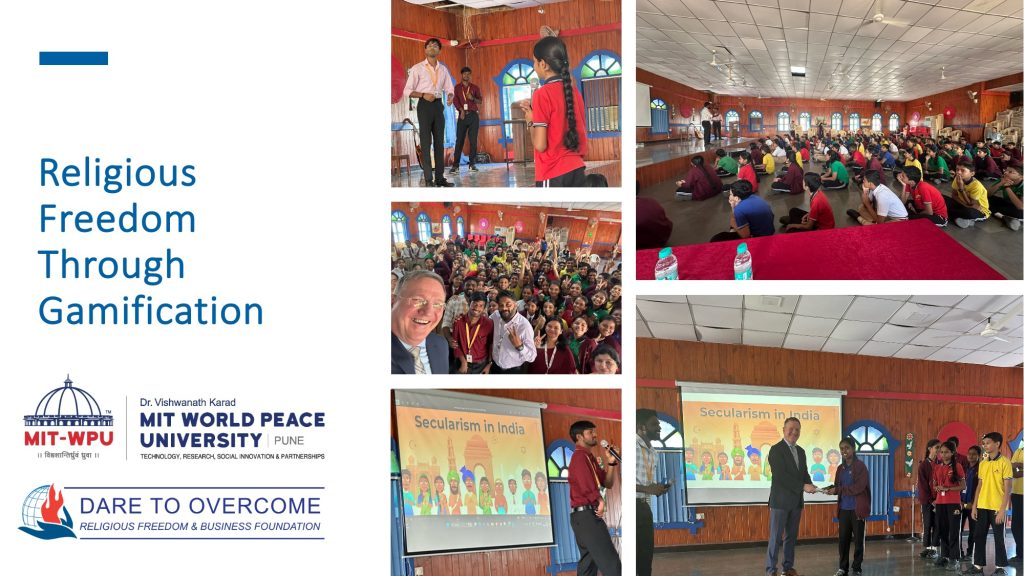
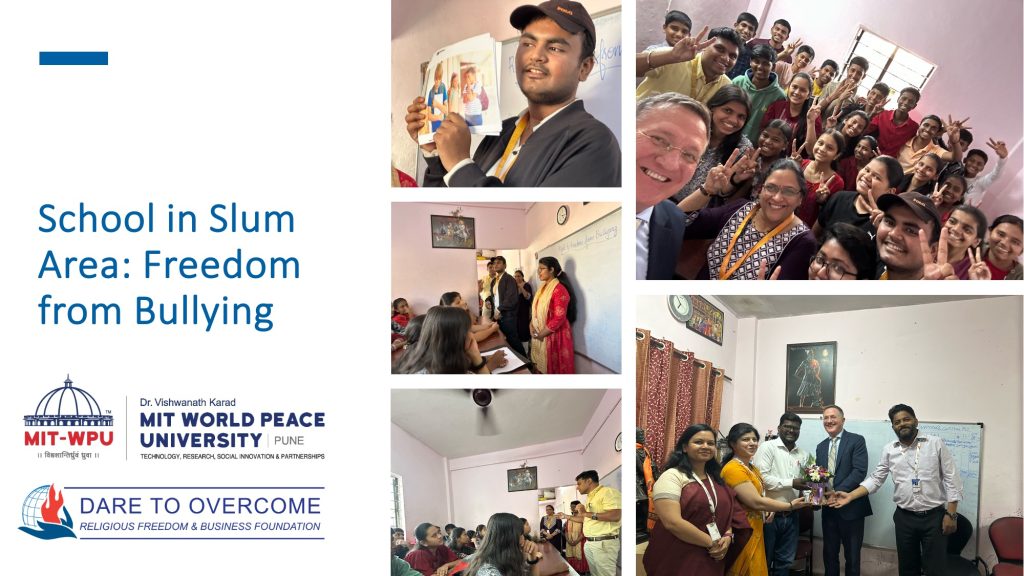
The Dare to Overcome 2024 roundtable discussion focused on advancing the Dare to Overcome Human Rights, Business Skills & Peace Secondary School Curriculum, an innovative initiative aligned with Sustainable Development Goal (SDG) 16. This program, piloted in India, combines human rights education with business skills to foster inclusive peace and prepare students for future challenges.
Key Updates from the Roundtable
Opening Remarks by Dr. Brian Grim (DTO Chair): Dr. Grim emphasized the potential global impact of the curriculum, highlighting its origin in Geneva and desired adaptations in Fiji, Ghana, Nigeria, the Philippines, and beyond. He noted India’s pioneering role in integrating this curriculum, supported by institutions like the National Institute of Advanced Studies (NIAS) and MIT World Peace University (MIT-WPU). He called for corporate support to fund and scale the project, emphasizing the curriculum’s alignment with Corporate Social Responsibility (CSR) mandates.
Pilot Curriculum Highlights
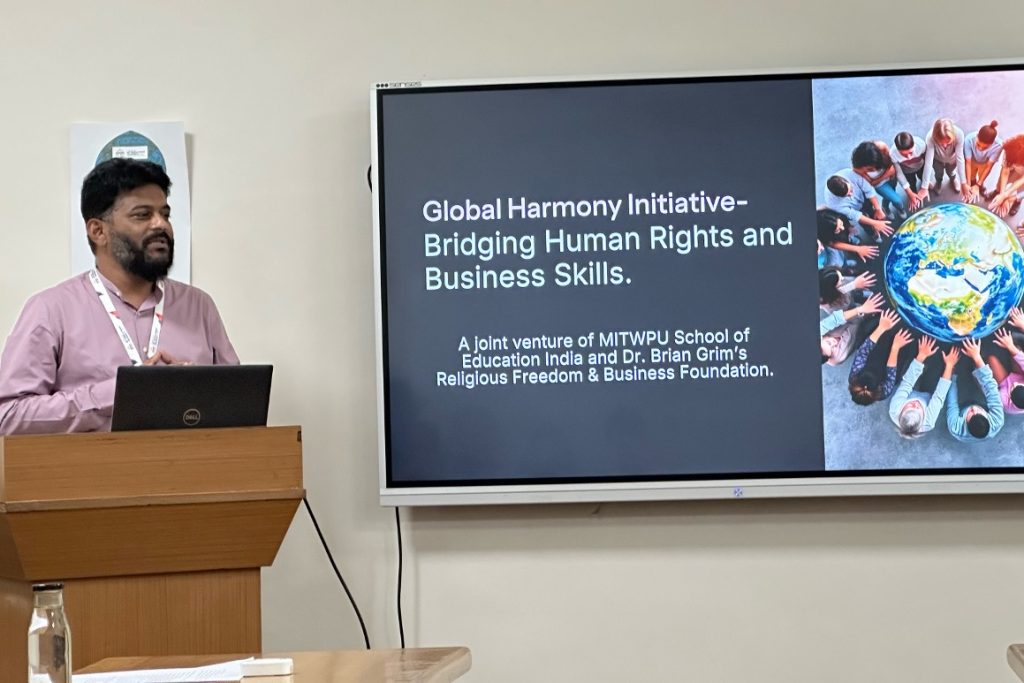
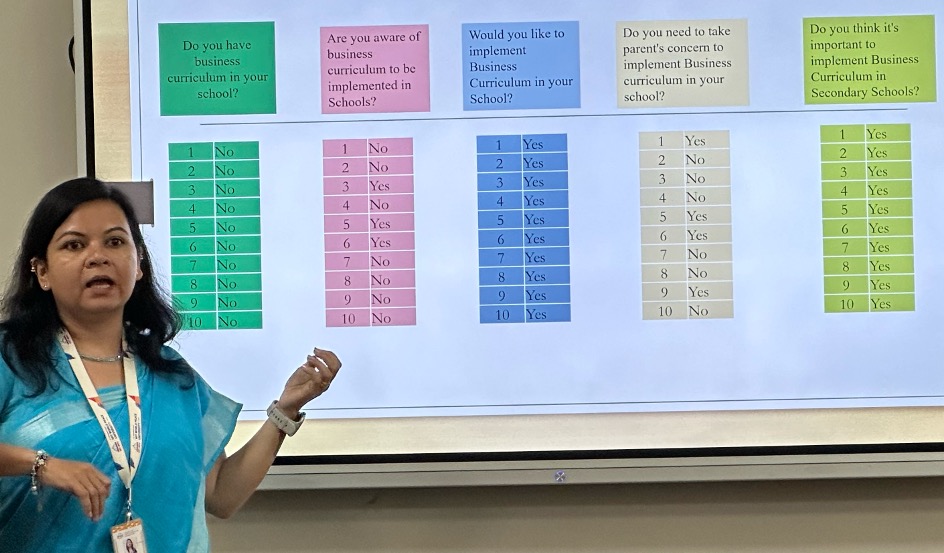
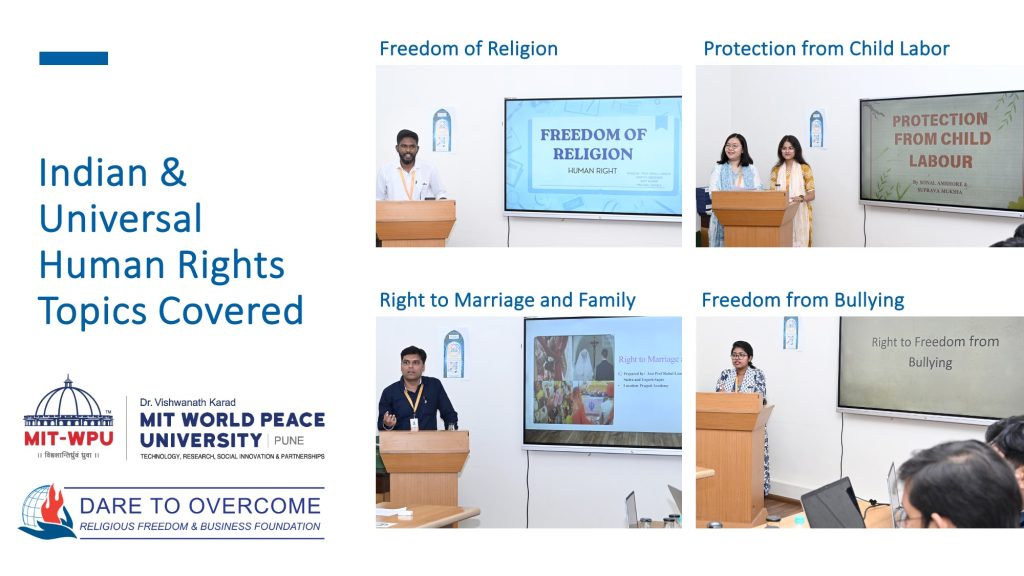
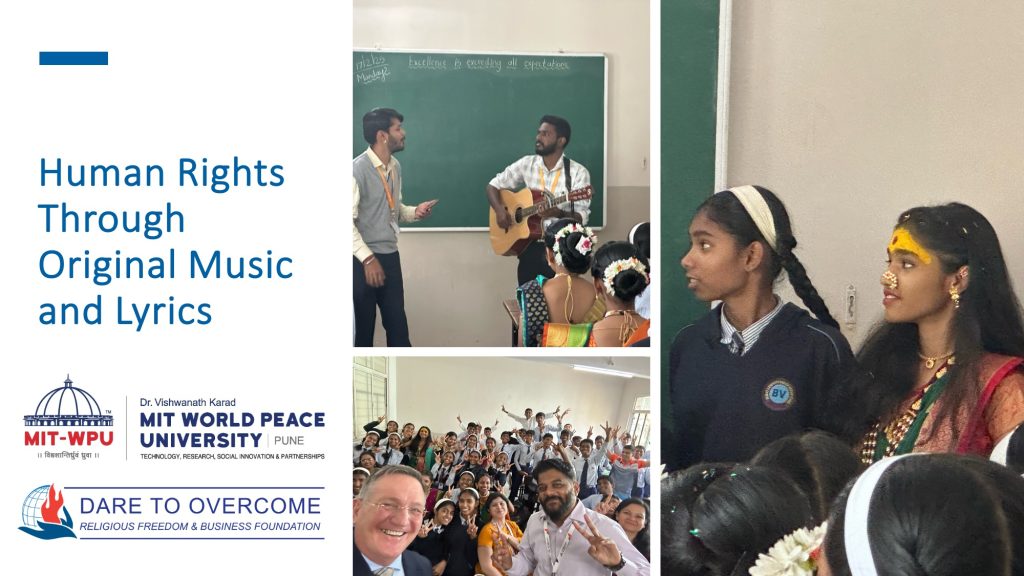
MIT-WPU’s Contributions: The Global Harmony Initiative at MIT-WPU bridges human rights education and business skills, aligned with the university’s mission of fostering global peace. The pilot began on September 30, 2024, involving five schools and 368 students across rural, urban, and semi-urban demographics. Dr. Shalini Tonpe and her team highlighted the transformative potential of targeting 9th-grade students, a critical age for developing abstract thinking and addressing ethical dilemmas. Using the Dare to Overcome curriculum, they crafted lessons combining human rights knowledge, like the right to equality, with business skills such as networking and critical thinking. Additionally, students co-created music and stories to enhance emotional engagement and reinforce the curriculum’s themes.
Outcomes and Challenges
Positive Outcomes
- – Increased awareness and understanding of human rights.
- – Enhanced empathy and critical thinking skills among students.
- – Creative outputs, including 10 original songs promoting equality and unity.
- – Engagement across diverse student groups, showcasing the curriculum’s adaptability.
Challenges Identified
- – Curriculum constraints include limited depth in certain topics.
- – Cultural and social barriers, with some minority schools hesitating to share perspectives.
- – Limited availability of trained teachers.
- – Sensitivity of certain topics, requiring careful handling.
Recommendations
- – Integrate human rights education into existing curricula.
- – Provide multilingual resources and teacher training.
- – Foster industry collaboration for resource sharing and volunteer engagement.
- – Utilize innovative pedagogies, such as storytelling and music.
Q&A and Future Directions
Participants raised several important questions, including:
- – Parent Engagement: While teachers’ feedback was reviewed, involving parents emerged as a priority.
- – Expansion to Younger Age Groups: Interest was expressed in adapting the curriculum for younger students, acknowledging developmental differences.
- – Longitudinal Studies: Tracking long-term impacts was suggested to measure the program’s efficacy.
- – Corporate Involvement: Companies like Salesforce and Dell expressed interest in supporting the curriculum through volunteer programs and tools.
Future Goals
- – Expand the pilot to underprivileged schools.
- – Propose the curriculum to India’s Ministry of Education for nationwide adoption.
- – Develop a scalable, online version of the curriculum to allow crowdsourcing and continuous improvement.
- – Strengthen global partnerships, positioning India as a leader in CSR and human rights education.
Concluding Remarks
Dr. Aleena Sebastian emphasized the importance of national and global relevance, advocating for collaboration among researchers, educators, policymakers, and communities. The roundtable concluded with a collective commitment to refining the curriculum and exploring innovative ways to amplify its impact. As a unique intersection of human rights and business skills education, the Dare to Overcome curriculum holds promise to shape a generation of empathetic, skilled leaders dedicated to peace and inclusion.
Read full notes from Roundtable here.
Faith and Business in Nepal Survey
15 Dec, 2024
Following Dare to Overcome (DTO) India 2024, we had meetings in Nepal to explore the potential for a similar initiative in Nepal and the applicability of our Human Rights and Business Skills Education initiative. Potential partners from Nepal participated in DTO India. While there was openness and interest, the basic needs for development and employment dominated the discussions.
Unity in Diversity: A Recap of Dare to Overcome India 2024
10 Dec, 2024
New Delhi, India – December 10, 2024 – The Dare to Overcome (DTO) 2024 conference, held on December 9 at the India Habitat Centre, New Delhi, concluded with resounding success, promoting peace and unity through intercultural understanding. The event brought together global leaders, innovators, and Employee Resource Groups (ERGs) from leading corporations to celebrate and champion diversity, equity, and inclusion in workplaces and communities.
A key highlight of the conference was the presentation of the King Husein Global Business & Intercultural Peace Awards, which recognized exemplary leaders in three categories: Core Business; Social Investment & Philanthropy; and Advocacy & Public Policy Engagement. The honorees for 2024 were Jyotsna Suri and Lawrence Chong (Core Business), Abha Dalmia and Akhil Gupta (Social Investment & Philanthropy), and Shombi Sharp and Baroness Verma (Advocacy & Public Policy Engagement). These leaders exemplify how businesses can foster interfaith harmony and drive meaningful societal change.
The event also featured the unveiling of the 2024 India REDI Monitor Report by the Religious Freedom & Business Foundation. This report highlighted the top 10 companies excelling in religious diversity and inclusion practices, underscoring India’s leadership in leveraging its cultural diversity as a strategic business advantage. REDI Monitor Report recognized top-performing companies on the BSE 100 for their exemplary efforts in promoting religious equity, diversity, and inclusion. Companies such as Godrej, Reliance Industries, Britannia, HDFC Life, Larsen & Toubro, Aditya Birla, InterGlobe, Hindalco, Indian Oil, Samvardhana Motherson, and Shree Cement were highlighted for their commitment to fostering faith-friendly workplaces. The report revealed that 98% of BSE 100 companies incorporate mentions or illustrations of religion in their diversity practices, positioning India as a leader in workplace inclusion globally. By comparison, the 2024 US REDI Monitor reports 86% of Fortune 500 companies mention or illustrate religion on their diversity pages, and the 2024 UK REDI Monitor finds that 79% of companies on the FTSE 100 Index do likewise.”
The event featured insightful panels, including ‘Changemakers on Diversity, Equity, and Inclusivity,’ with speakers like Parmesh Shahani, Dr. Anjlee Agarwal, and Keshav Suri, and ‘Women and Workplace Inclusivity,’ featuring Baroness Verma, Sahira Nair, and Sanjoy K. Roy. Special sessions included a fireside chat on ‘Designing the Future – AI, Ethics & Faith’ with Lawrence Chong and Anirudh Suri, and ‘Paths to the Divine,’ which explored faith, interconnectedness, and diversity, with insights from Haji Syed Salman Chishti and Archbishop Dr. Felix Machado.
A series of cultural performances enriched the day, starting with Maestro Sessions by Raghav Chandra and Ishan Sharma, the soulful melodies of ‘Faqat by Alif’ in the afternoon, and culminating in an electrifying gala performance by the ‘Kutle Khan Project,’ showcasing the vibrant rhythms of Rajasthan. This extraordinary gathering left attendees inspired by the power of intercultural understanding and collective harmony
Brian Grim, Global Chairperson Dare to Overcome, said, “The resounding success of Dare to Overcome 2024 highlights the transformative potential of diversity and inclusion in shaping pathways to peace and innovation. India’s rich cultural and spiritual heritage has once again demonstrated its capacity to inspire the world by showcasing how unity in diversity drives societal and corporate progress.”
Sanjoy K. Roy, Managing Director of Teamwork Arts, reflected on the event’s impact, stating, “Dare to Overcome 2024 was a powerful celebration of India’s position as a beacon of unity in diversity. The event showcased how varied backgrounds, beliefs, and cultures converge in India to create innovation and collaboration. By embracing unique ideas and perspectives, we can continue to strengthen the diversity that defines our corporate landscape and drives collective success.”
Syed Shams Jawaid, Producer Dare to Overcome & Vice President, International Events Teamwork Arts, remarked, “Hosting the second annual Dare to Overcome Conference in India has been an incredible journey of celebrating Unity in Diversity. This year’s event reaffirmed the importance of India’s cultural and spiritual richness as a business asset, fostering innovation and collaboration. Bringing together visionary leaders to build a more inclusive and promising future remains at the heart of our mission, and this event has furthered that goal in meaningful ways.”
DTO 2024 also introduced the Human Rights, Business Skills & Peace Secondary School Curriculum, an initiative designed to educate future generations on the intersection of human rights and business skills. This innovative curriculum aims to build inclusive communities by integrating constitutional rights with essential professional capabilities.
The success of Dare to Overcome 2024 reaffirms the importance of unity in diversity as a driving force for societal and corporate growth. It stands as a testament to the potential of collaborative efforts to shape a better, more inclusive world.
Visit DTO Website for highlights and insights from the event.
About Teamwork Arts:
Teamwork Arts is a highly versatile production company, with roots in the performing arts, social action, and the corporate world. For over 30 years, Teamwork Arts has taken India to the world, and brought the world to India, presenting the finest of Indian performers, writers, change makers, and visual artistes in the knowledge and arts space, in India and abroad. Every year, we produce over 33 festivals in 72 cities, and 26 countries, in the fields of performing & visual arts, as well as literature. We produce the world’s largest literary gathering: the annual Jaipur Literature Festival; JLF international now travels to the US, UK, Canada, Australia, the Maldives, and Europe. Even amidst the upheaval and unsettling times of 2020 and through 2021, Teamwork Arts successfully launched the digital series, JLF Brave New World and Words Are Bridges, which were viewed by over 4.8 million people in their first season. Through its digital avatar, the Jaipur Literature Festival reached over 27 million viewers in January 2021. Art Matters empowers artistes across India to collaborate by commissioning them to create new works. The digital series Be Inspired was launched in 2021 – a series that crystal gazes into the future, with conversations on science, technology, innovation, environment, and more. The first on-ground edition of ‘Be Inspired – Festival of Ideas’ was held in April 2023.
More information at: www.teamworkarts.com
For more information, please contact:
Teamwork Arts:
- Apeksha Bajaj
- Public Relations & Corporate Communications
- M: +9654880195 | E: apeksha@teamworkarts.com
- Zimisha Communications:
- Imtiaz Alam
- M: +91 98102 27818 | E: imtiaz@zimisha.com
- Santosh Kumar
- M: +91 9990937676 | E: santosh@zimisha.com
Latest News
Donate
Thank you for your support!