Working for workplace religious belonging, inclusion & freedom

E-NEWS ACTION DONATE

Nvidia’s Controversy Highlights AI’s Human Challenge

10 Nov, 2026

Why Character, Faith and Belief Matter

By Brian J. Grim, Ph.D.

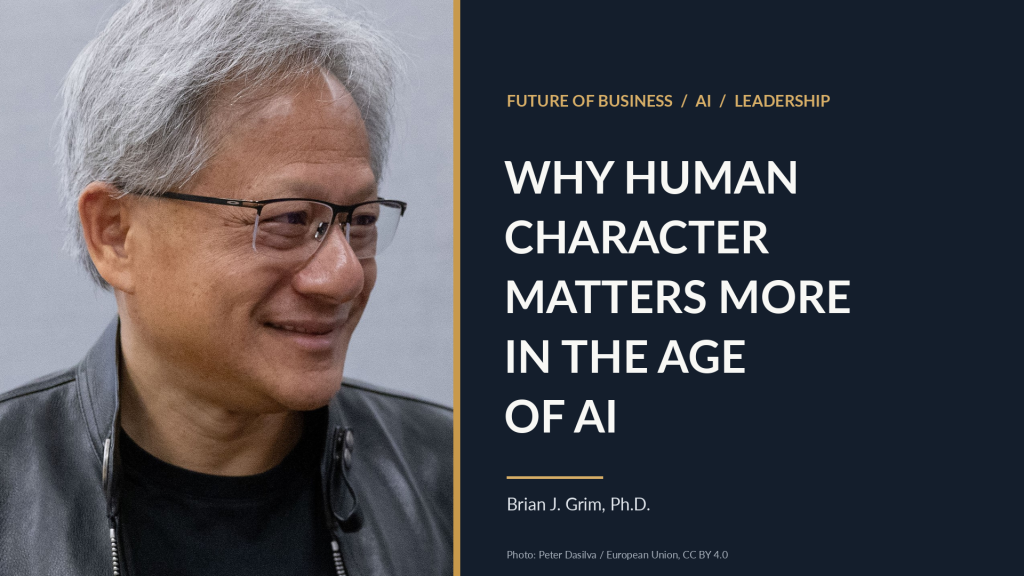
The controversy surrounding Nvidia chief executive Jensen Huang has brought questions of human character into the heart of the AI industry.

On 8 November, Huang publicly apologized for being unfaithful to his wife and for the hurt he had caused his family. His message also addressed colleagues, directors, partners and shareholders. “My responsibility is to serve you and be worthy of your trust,” he wrote.

That same day, Nvidia’s board announced an independent investigation following reports that Huang had been the target of a foreign intelligence effort. The board said it had no reason to believe that national security or company secrets had been compromised, while committing to examine all available information.

These matters should not be conflated. An admission of infidelity does not establish that security was compromised. The investigation must establish the facts, and Huang’s family deserves privacy.

But the situation raises a question that reaches well beyond Nvidia: are we giving enough attention to the character of the people entrusted with increasingly powerful technologies and businesses?

Technical brilliance does not remove human fallibility

Human capability requires character, competence.

Much of the business discussion about AI focuses on capability: what it can do, how it can improve productivity and what new skills employees will need.

My recent board paper, The Overlooked Source of Human Capability and Character: Why Faith and Belief Matter in the Age of Artificial Intelligence, asks a related question. As technology expands what organisations can do, what qualities become more important in the people deciding how that capability should be used?

The distinction is between competence and character. Competence includes the knowledge, skills and expertise needed to perform a role. Character helps determine how those capabilities are exercised, particularly when pressures are high, interests conflict or the right course is difficult. Neither is sufficient on its own.

The paper identifies seven qualities with particular relevance to business: wise judgement, integrity, responsibility, trustworthiness, courage, stewardship and care for others. These matter in decisions about technology, but also in how leaders fulfill commitments, respond to criticism and exercise authority.

This is not a claim that AI caused Huang’s conduct. It is a reminder that technological achievement does not settle questions of human judgement or trustworthiness.

We should be able to recognise exceptional competence without assuming that it makes someone less in need of accountability. Indeed, the greater the responsibilities entrusted to a leader, the more important that accountability becomes.

Character and governance belong together

Character shapes long-term enterprise value.

The Nvidia situation is also drawing attention to the role of boards. Reuters’ reporting has raised questions about whether directors with longstanding relationships with Huang can investigate his conduct with sufficient independence. Those are questions for scrutiny, not conclusions that should be assumed in advance.

For boards more generally, the lesson should be practical. Can colleagues challenge senior leaders? Are conflicts of interest disclosed and addressed? Do expectations of conduct apply consistently, including to those whose commercial contribution appears indispensable? Can concerns be examined independently and fairly?

An emphasis on character should strengthen governance, not replace it. Trust in an individual is not a reason to dispense with oversight. Equally, policies and controls should not become a reason to neglect the character of those exercising judgement within them.

This does not mean employers should police employees’ private lives. It means they should address conduct that affects organisational responsibilities, relationships and risks, with clear boundaries and fair procedures.

The question is not whether leaders are capable of failure. It is how organisations encourage responsible conduct, respond when trust is damaged and create conditions in which concerns can be raised before harm grows.

Where character is formed and renewed

Businesses look for integrity, judgement and trustworthiness when recruiting and promoting people. Yet these qualities begin forming long before someone joins an organisation, through family, education, relationships, mentors, service and experience. For many people, religion or belief is an important part of that formation throughout their lives.

Businesses also become part of the process. What leaders reward, tolerate and demonstrate through their own behaviour can strengthen or undermine the qualities they say they value. An organisation can encourage honesty, or make people afraid to speak. It can reinforce responsibility, or allow results to excuse how they were achieved.

That is why character should not be treated simply as something assessed at recruitment and then assumed to remain unchanged. It needs continuing attention, encouragement and accountability.

For many employees, faith and belief provide some of those resources. Recognising that contribution does not imply that religious people have better character or that religion prevents wrongdoing. Nor does the Nvidia situation justify speculation about anyone’s personal beliefs.

The point is more straightforward: if businesses depend on character, they should understand the sources through which people form and sustain it.

Convictions need to become practices

Beliefs and practices shape character.

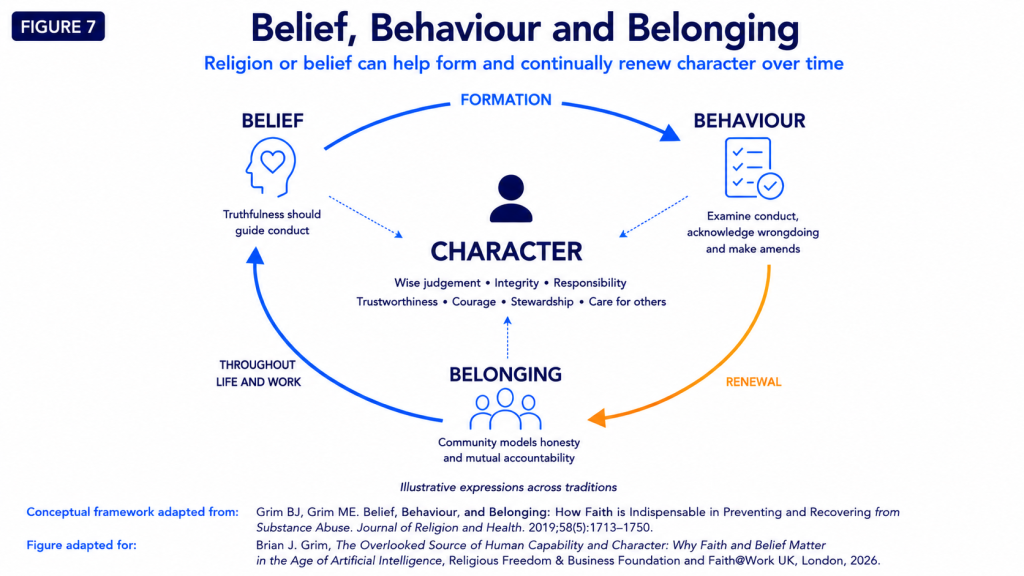
In the paper, I describe this process through belief, behaviour and belonging.

Beliefs help people understand their purpose and responsibilities. Practices such as prayer, meditation, study, generosity and service give repeated expression to those convictions. Communities provide examples, encouragement, practical support and accountability. Together, these can help form and continually renew character.

This is relevant to business because declaring a value does not ensure that people will practice it. Integrity needs expression in truthful decisions and a willingness to accept responsibility. Care for others needs to shape how people are treated. Stewardship requires attention to consequences beyond immediate advantage.

The paperexamines several ways these connections already operate in organisational life. At Accenture, employee faith networks and practical support contributed to wider organisational capability. At Japan Airlines, Kazuo Inamori’s Buddhist, spiritual and philosophical formation contributed to a shared management philosophy reinforced through education, leadership expectations and accountability.

These are different approaches, not a single model for others to copy. They show why faith and belief inclusion can be relevant to leadership, culture and responsible decision-making, as well as accommodation and employee belonging.

What boards should ask

Four questions for responsible governance.

Faith and belief inclusion must respect people of all faiths and beliefs, including those who are not religious. Participation should be voluntary, privacy protected and freedom of conscience respected. No employee should be pressured to disclose beliefs or participate in religious activities.

The board’s responsibility is to govern the conditions in which people contribute, not to judge what they believe. The paper proposes four questions:

  • Recognise. Do we recognise the potential contribution of religion or belief to character and working life?
  • Enable. Can employees who wish to do so bring this part of themselves into working life appropriately and voluntarily?
  • Value. Are we open to insights shaped by religion or belief, including those relevant to leadership and the responsible use of AI?
  • Review.Are these conditions working fairly, consistently and responsibly in practice?

These questions belong within existing discussions about strategy, people, culture, ethics, risk and responsible technology. They should sit alongside clear standards of conduct and effective oversight, not be offered as substitutes for them. A responsibility that remains human.

We should allow the Nvidia investigation to establish the facts without either minimizing acknowledged wrongdoing or treating unresolved allegations as proven.

For other business leaders, however, there is no need to wait before examining their own organisations. Are we supporting the qualities of character on which we depend? Are we rewarding conduct consistent with our stated values? Are we overlooking sources of meaning, responsibility and accountability that matter deeply to our people?

AI can expand organisational capability. It does not relieve people of responsibility for how that capability is exercised.

As AI expands what businesses can do, the character of those deciding what they should do becomes more consequential.

Boards should ask where that character is formed, how it is sustained and whether their own cultures strengthen or undermine it. For many employees, faith or belief is an important part of the answer.

That conversation belongs in the boardroom.

Hostility Towards Christians: What the Evidence Actually Shows

10 Nov, 2026

By Brian J. Grim, Ph.D.

Five key findings

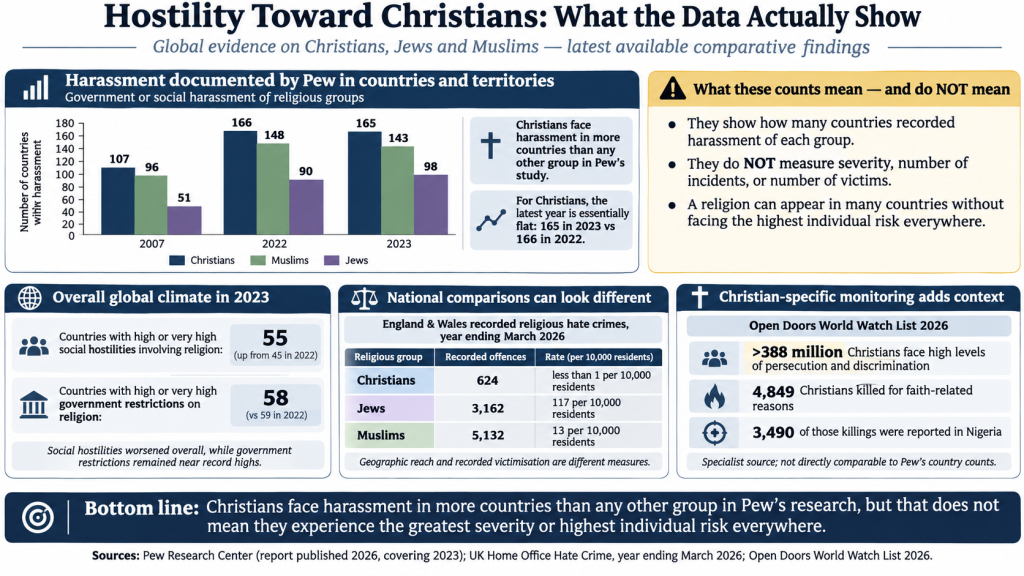
  1. 1. Christians face harassment in more countries than any other religious group: 165 countries and territories in Pew’s latest findings, covering 2023. Pew Research Center
  2. 2. The long-term geographic spread has increased, but the latest Christian count was essentially unchanged: 165 countries in 2023 compared with 166 in 2022. Pew Research Center
  3. 3. Geographic spread is not a ranking of suffering. These counts cannot establish which group experiences the greatest severity, most victims or highest individual risk. Pew Research Center
  4. 4. National comparisons reveal different patterns. Jews and Muslims face much higher population-adjusted rates of recorded religious hate crime than Christians in England and Wales. GOV.UK
  5. 5. Religious freedom should not become a competition between victims. Protecting Christians does not require minimizing the suffering of other communities.

What the global evidence establishes

Are Christians facing increasing hostility worldwide? The answer depends on what we measure. Documented harassment has spread geographically over the longer term. But that does not mean every measure is rising, or that conditions are deteriorating everywhere. Pew Research Center

Pew Research Center’s study, whose methodology I helped develop, separates government restrictions from social hostilities. It examines documented laws, policies and actions rather than relying on perceptions alone. Religious Restrictions Codebook README

The corrected historical dataset shows harassment of Christians in 107 countries in the baseline year, labelled 2007. By 2022, that number had reached 166. Muslims experienced harassment in 96 countries initially and 148 in 2022; the corresponding Jewish figures were 51 and 90. These historical comparisons use Pew’s corrected public dataset, which takes precedence over earlier publications. Pew Research Center Religious Restrictions Dataset …

Pew’s newer report, published in June 2026, covers 2023. It records Christian harassment in 165 countries, Muslim harassment in 143, and Jewish harassment in 98. The latest Christian count was effectively flat, while the Jewish count reached its highest point in the series. Pew Research Center

Publication dates also require care: the newest Pew analysis describes events several years earlier. More recent national and specialist reports help fill that gap, but their different definitions and coverage prevent simply joining their findings into one continuous worldwide trend. Pew Research Center

Across religions, countries with high or very high social hostilities increased from 45 to 55 between 2022 and 2023, although that remained below the 2012 peak of 65. Government restrictions remained near record levels. These are country-wide measures, not Christian-specific severity scores. Pew Research Center

What “most persecuted” obscures

The statement that Christians experience harassment in the largest number of countries is supported. Calling them the “most persecuted” without defining the measure goes beyond that finding. Pew Research Center

Pew’s group-specific indicators record whether qualifying harassment occurred, not how many people suffered or how severely. A country with one documented incident and a country with widespread repression can both enter the same group’s country count. Harassment encompasses nonphysical intimidation as well as serious abuse. Religious Restrictions Codebook

Population size and geographic distribution also matter. A widely dispersed religion has more opportunities to appear in country counts. A small community can face devastating persecution concentrated in relatively few places. Neither observation makes its suffering less significant.

Nor can we calculate individual risk by dividing countries with harassment by the worldwide population of a religion. Countries are not victims. A meaningful risk comparison needs compatible measures of people affected and populations exposed.

What Christian-specific monitoring adds

Open Doors’ World Watch List 2026 estimates that more than 388 million Christians face high levels of persecution and discrimination. Its reporting period runs from October 2024 through September 2025. Open Doors

This is a population estimate informed by assessments of pressure and violence, not a register of 388 million individually verified victims. It provides evidence about Christians but does not independently establish their position relative to other religions. Open Doors

Its latest indicators also move in different directions. Open Doors reports 4,849 Christians killed for faith-related reasons, compared with 4,476 in the previous edition. Meanwhile, recorded cases involving churches and public Christian properties fell from 7,679 to 3,632. Open Doors

Nigeria accounts for 3,490 of the latest reported deaths, making the interpretation of Nigerian violence particularly consequential. Open Doors US

Separate research by the Observatory for Religious Freedom in Africa recorded 22,835 Christian and 10,519 Muslim civilian fatalities between October 2019 and September 2025, with another 8,495 victims’ religious identities unknown. These are the organisation’s recorded totals, not proof of the motive behind every killing. Orfa

A Christian killed in conflict, a Christian community deliberately targeted, and someone killed specifically for practising Christianity are overlapping but different categories. Recognising that distinction neither excuses violence nor denies religious targeting.

Comparisons look different locally

National statistics offer comparisons within a shared reporting framework.

In England and Wales, police recorded 624 religious hate crimes targeting Christians in the year ending March 2026, up 24%. They recorded 3,162 targeting Jews and 5,132 targeting Muslims. GOV.UK

Relative to population, the published rates were 117 offences per 10,000 Jewish residents, 13 per 10,000 Muslim residents and fewer than one per 10,000 Christian residents. These are offence rates, not the percentage of individuals victimised. Underreporting and changes in police recording also limit interpretation. GOV.UK

In the United States, ADL’s analysis of FBI data identified 1,528 anti-Jewish incidents in 2025, approximately 63% of recorded single-bias religious hate-crime incidents. That represented a decline from 2024, yet remained the third-highest annual anti-Jewish count recorded. ADL

Neither national pattern determines the worldwide ranking. Both demonstrate why geographic reach, individual exposure and recorded incidents must remain distinct.

Protect people, not rankings

The evidence warrants concern about hostility towards Christians without requiring exaggerated claims. It also warrants concern about antisemitism, anti-Muslim hostility and threats to smaller religious communities. Pew Research Center

Good reporting should identify the source, observation period and unit being counted. Countries, crimes, complaints, deaths and populations living under restrictive conditions are not interchangeable. Reports drawing on overlapping evidence should not be treated as wholly independent confirmations.

We should neither minimise persecution because a statistic has limitations nor abandon scrutiny because the suffering is real.

The case for protecting Christians does not depend on proving that someone else suffers less. Religious freedom is a commitment to protecting people’s freedom of conscience, whether their beliefs are ours or not.

A Common Way Forward: A Year of Action for Human Flourishing

5 Nov, 2026

Building on Dare to Overcome London 2026, towards the UK’s G20 year.

By Brian J. Grim, Ph.D., Global Chair, Dare to Overcome

Following the US midterm elections, there will be plenty of discussion about what political leaders should do next. But there is another question worth asking, whatever our politics and wherever we live:

What can we do together to make the world a better, kinder place?

We do not need to agree on everything to answer that question. People with different religious, philosophical and political convictions can work together to expand opportunity, protect human dignity and help their neighbours flourish.

That does not mean setting aside deeply held beliefs or overlooking injustice. It means recognising that disagreement need not prevent cooperation, and that defending our own freedom should include respecting the freedom of others.

This is the common way forward that Dare to Overcome seeks to advance: not uniformity of belief, but shared responsibility expressed through practical action.

From a remarkable week to a year of shared work

At Dare to Overcome London 2026, business leaders, investors, policymakers, academics and faith communities came together to explore The Economics of Kindness. Across the week, conversations connected responsible leadership, inclusive workplaces, economic opportunity and the human implications of artificial intelligence.

For us, the Economics of Kindness is a practical challenge. What does respect for human dignity change about the way we employ people, invest resources, educate young people and use technology? How do we make our values visible in decisions that affect others?

The next stage is to build on the relationships formed in London and connect promising initiatives with people who can help them develop.

London 2027 should be where we share progress, not where we wait to begin.

Working with the Religious Freedom & Business Foundation, Faith@Work UK and our wider network of partners, we want to advance six connected areas of work.

1. Equip young people with rights, skills and opportunities

A common future requires young people who can work across differences, understand their responsibilities and recognise both their own dignity and that of others.

Our Human Rights & Business Skills Curriculum connects human rights education with practical skills for working with others. Its lessons have been piloted in schools in India with educators from MIT World Peace University, providing experience on which further adaptations can build.

We are exploring ways to pilot the curriculum in the UK in advance of the 2027 G20 summit.

The next step is to identify interested educators, community partners and businesses, consider how the materials would fit local needs, and agree how a pilot’s usefulness could be assessed. This is an opportunity under exploration, not an announced school programme.

The ambition goes beyond teaching young people to tolerate difference. We want to help them develop the confidence and skills to cooperate, solve problems and contribute to their communities.

Educators could help adapt and test the lessons. Businesses could support their development or connect learning with the world of work. Community organisations could help ensure that young people from different backgrounds have a voice in shaping the approach.

2. Make faith and belief inclusion part of everyday working life

The workplace offers a practical setting in which people can learn to cooperate across differences.

Through the Faith-Friendly Workplace REDI Index, organisations can assess their policies and practices and identify opportunities to improve. Salesforce and MSD provide examples of the workplace leadership recognised through RFBF’s 2026 awards.

Our priority is to make those lessons useful to more employers: how employee networks build understanding, how managers respond to questions of faith and belief, and how organisations turn commitments to dignity into everyday practice.

Faith and belief inclusion must respect everyone, including people with no religious affiliation. Participation should be voluntary, with clear boundaries, privacy and protection from coercion. It is not about asking an employer to endorse a religion.

Between now and 2027, we want more organisations to examine their starting point, choose practical improvements and share what they learn. An employer does not need to begin with a large programme. A thoughtful conversation, a review of practice or participation in REDI can provide a starting point.

3. Strengthen human judgement in the age of AI

As technology expands what organisations can do, the question of what they should do becomes more consequential.

Our Board Paper, Why Faith and Belief Matter in the Age of Artificial Intelligence, identifies seven qualities on which organisations depend: wise judgement, integrity, responsibility, trustworthiness, courage, stewardship and care for others. It asks leaders to recognise how these qualities are formed through families, communities, education, experience and traditions of religion or belief.

We want to take that discussion into boardrooms, leadership development and everyday decisions about technology and people.

A useful first step is a focused leadership conversation: What human qualities does our organisation depend on? How are we cultivating them? Who remains accountable when AI informs a consequential decision?

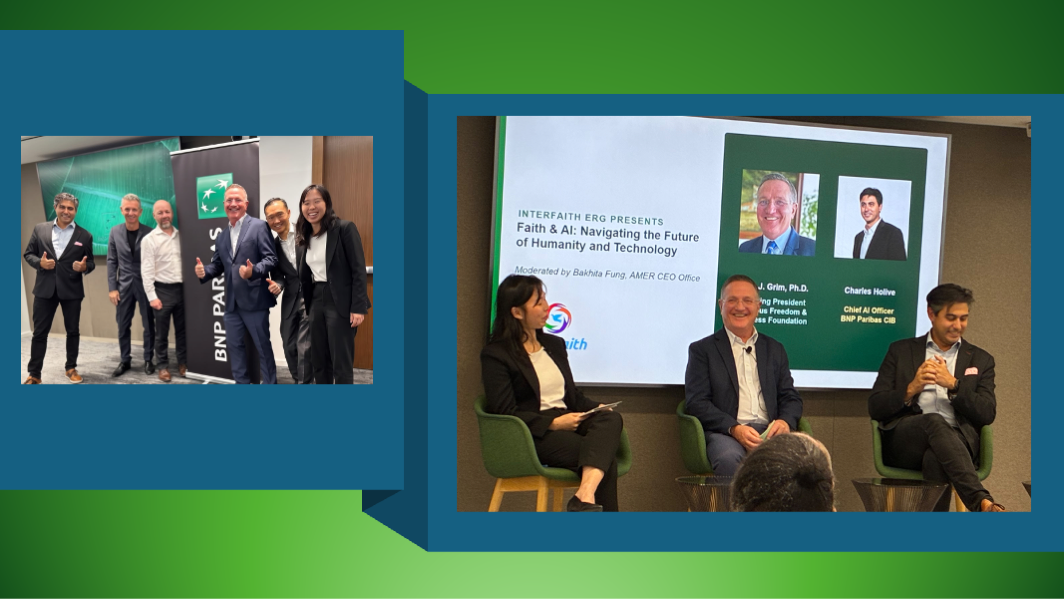
The Faith & AI discussion at BNP Paribas and Dell’s interfaith exploration of faith in the age of AI offer further resources for this work. Religious Freedom & Business Foundation

We are also exploring an expanded AI, Faith & Human Dignity gathering in 2027. Its value should come from helping people make better decisions throughout the year, not simply generating another discussion about technology.

4. Connect ethical investment with practical opportunity

Values become economically significant when they influence where resources go, whose ideas receive support and what opportunities become possible.

The pilot Multi-Faith Economy Index, launched at Lambeth Palace in October, was developed by Consulus with the Religious Freedom & Business Foundation and the FoRB Foundation. It examines public evidence of how faith-aligned institutions connect their beliefs with investment, governance and other decisions. It provides a starting point for greater transparency and learning, rather than a guarantee of impact.

Building on this work, we want to explore collaboration among Islamic finance, other faith-informed financial traditions, ethical investors, philanthropists and entrepreneurs.

The practical question is not simply how much capital these communities hold. It is how their resources and experience might help worthwhile enterprises create jobs, widen opportunity and serve communities.

We are exploring a larger faith-based impact investment gathering in 2027. In the meantime, we welcome introductions to investors and enterprises interested in exchanging experience, identifying shared priorities and developing credible partnerships.

5. Share stories that lead to action

Recognition matters most when it helps others see what is possible.

The King Husein Global Business & Interfaith Peace Awards highlight leaders who build understanding across communities through business, investment, education and culture. The 2026 awardees offer examples of different routes towards that shared purpose. dto.world

The London Human Dignity Film Forum brought another dimension to the 2026 programme, using film and discussion to explore courage, opportunity and human dignity. We hope to build on that foundation through an expanded festival in 2027.

Our aim is to connect inspiration with practical learning. What made an initiative work? What obstacles did its leaders encounter? What would another community need to adapt it successfully?

We welcome stories that can answer those questions, including modest local initiatives as well as internationally recognised achievements. A useful example need not be large. It needs to offer something others can learn from and put into practice.

6. Bring practical experience into the G20 conversation

The UK’s 2027 G20 presidency creates an opportunity to connect this work with international discussions about economic opportunity and human flourishing. The government has confirmed that the G20 Leaders’ Summit will take place in Manchester on 27–28 November 2027.

We are exploring opportunities to share lessons through the G20 Interfaith Forum and other networks that connect faith-informed experience with public policy. IF20’s work brings religious, academic, civil society and policy perspectives into dialogue around global challenges.

DTO is independently organised, not an official G20 event. Our contribution should be grounded in practical experience: what educators learn from a pilot, what employers discover about inclusion, what investors can demonstrate about impact, and what communities achieve through cooperation.

The goal is not to present every initiative as a universal solution. It is to offer credible examples, acknowledge limitations and help others judge what might be useful in their own settings.

What should be different by the time we meet again?

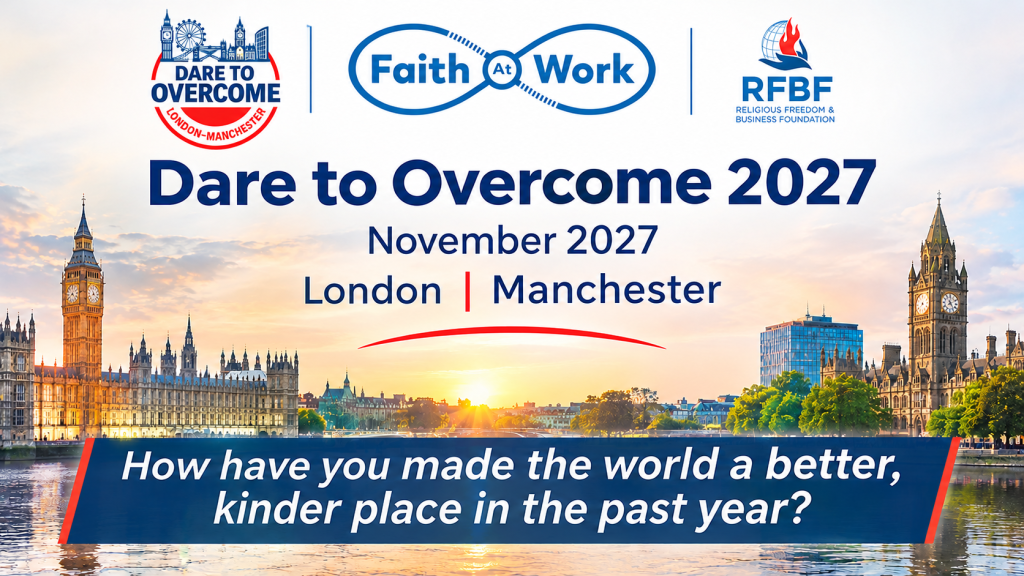
We are planning to gather again in London in November 2027, with dates and programme details still to be confirmed.

By then, we want more to share than a list of meetings.

We want to hear about young people gaining useful skills, employers improving practice, leaders making more responsible decisions and partnerships opening opportunities that did not previously exist.

Some efforts will be pilots. Others will expand established work. Some will reveal approaches that need to change. Honest learning should be part of the contribution.

For each initiative, we can begin with a manageable goal, identify who needs to be involved and decide what evidence would show progress. That gives our shared ambition a practical form.

The measure of the movement should be what people accomplish together between gatherings.

Help shape the common way forward

You do not need to wait until London 2027 to take part.

Bring an initiative. Tell us about work that advances human dignity, economic opportunity or cooperation across differences, and what would help it develop.

Contribute your expertise or resources. Help explore a school pilot, strengthen workplace practice, convene a leadership discussion, support a promising project or share a story others can learn from.

Open a door. Introduce an educator, employer, investor, community leader or creative partner whose involvement could make a difference.

To begin, email me with the subject “DTO 2027: My contribution”. A few sentences are enough: what you would like to advance, what you can contribute and what help or connections you need.

When we gather again, our shared question will be:

How have you made the world a better, kinder place in the past year?

We do not need to think alike to begin answering it together.

MSD Recognised as Global Leader in Faith-Friendly Workplaces in Biopharmaceutical Industry

28 Oct, 2026

Religious Freedom & Business Foundation honours MSD with its 2026 Faith-Friendly Workplace REDI Award for advancing dignity, belonging and respect for faith and belief in the workplace.

FOR IMMEDIATE RELEASE

LONDON, 28 October 2026 — The Religious Freedom & Business Foundation (RFBF) has recognised MSD as the leading global faith-friendly workplace among biopharmaceutical organisations in its 2026 Faith-Friendly Workplace REDI Index Awards.

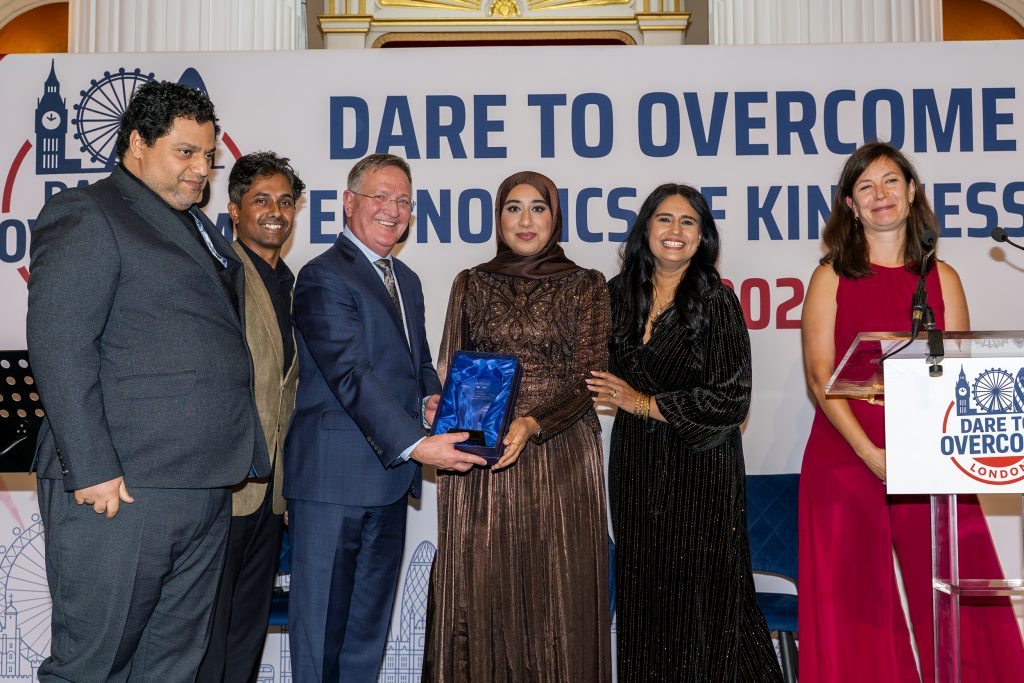
The recognition, celebrated at the Dare to Overcome Global Awards Gala at Mansion House in London on 13 October, highlights MSD’s commitment to creating a workplace where employees of different religious and non-religious beliefs are respected, welcomed and able to contribute fully.

In an industry dedicated to improving human health and wellbeing, MSD demonstrates that respecting the whole person, including deeply held faiths and beliefs, is an important dimension of workplace culture.

MSD’s Commitment to Faith and Belief Inclusion

A significant example of MSD’s approach is its Interfaith Organisation, one of the company’s ten Employee Business Resource Groups (EBRGs). MSD describes the Interfaith Organisation as a welcoming, respectful and nurturing community for employees from all spiritual paths and backgrounds.

The Interfaith Organisation provides opportunities for employees to learn about different faith traditions and philosophies, build understanding across differences and strengthen a culture of respect and belonging.

MSD’s broader commitment to employee inclusion is substantial. According to its 2025/2026 Purpose for Progress Impact Report, more than 28,000 employees, representing over 35% of its global workforce, participated in at least one of its ten employee business resource groups at the end of 2025.

“MSD demonstrates that scientific excellence and respect for the human person go hand in hand,” said Dr Brian Grim, President of the Religious Freedom & Business Foundation. “In a sector devoted to improving lives, MSD is also showing what it means to value the whole person at work. Its leadership in faith and belief inclusion provides an inspiring example for the global biopharmaceutical industry.”

Why Faith-Friendly Workplaces Matter

The recognition comes as RFBF’s 2026 REDI Monitor: Emerging Trends in Faith and Corporate Culture identifies an important shift in corporate approaches to faith inclusion.

The longitudinal study of Fortune 500 and FTSE 100 companies found that public-facing references to religion and belief declined in 2026, even as workplace structures supporting faith inclusion, particularly faith-oriented employee resource groups, proved more resilient.

The findings underscore the importance of moving beyond public statements to meaningful workplace practices that foster trust, dignity, belonging and engagement.

MSD’s recognition demonstrates how faith and belief inclusion can form part of an organisation’s broader commitment to its people and purpose.

About the Faith-Friendly Workplace REDI Index

The Faith-Friendly Workplace REDI Index is an international benchmarking initiative of the Religious Freedom & Business Foundation. It recognises organisations that demonstrate meaningful efforts to include religion and belief, including non-religious worldviews, within their workplace cultures.

The Index assesses evidence of workplace practices, employee networks, policies and leadership commitment that help people of different faiths and beliefs contribute fully.

MSD, known as Merck & Co., Inc., Rahway, New Jersey, USA in the United States and Canada, was also recognised in the biopharmaceutical sector during the 2026 U.S. REDI Index Awards in Washington, DC, on 20 May.

Learn more: Faith-Friendly Workplace REDI Index

About the Religious Freedom & Business Foundation

The Religious Freedom & Business Foundation (RFBF) is a non-partisan, non-profit organisation dedicated to demonstrating the positive impact of religious freedom and faith and belief inclusion on business, workplaces and economies worldwide. Through research, benchmarking, awards and global engagement, RFBF promotes workplaces where people of all faiths and beliefs, including those with no religious affiliation, are treated with dignity and respect.

Media enquiries: contact@religiousfreedomandbusiness.org

Website: https://religiousfreedomandbusiness.org

Faith & AI: Navigating the Future of Humanity and Technology

22 Oct, 2026

As Artificial Intelligence continues to rapidly reshape our professional landscapes and personal lives, it brings with it profound questions regarding ethics, human agency, and our shared values.

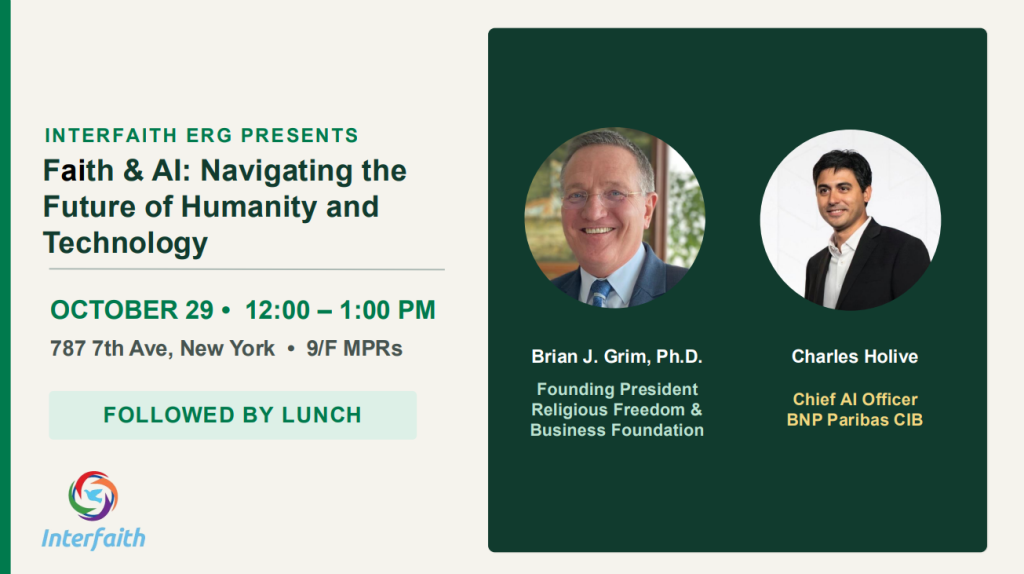
The BNP Paribas Interfaith ERG will host its 2026 flagship event: “Faith & AI: Navigating the Future of Humanity and Technology.”

Event Details:

  • – Date: Thursday October 29, 2026
  • – Time: 12:00PM – 1:00 PM (Followed by a lunch reception)
  • – Location: 787 7th Avenue, 9th floor
  • – Format: Panel Discussion & Networking Lunch

 Distinguished Speakers:

  • – Brian Grim: Founding President of the Religious Freedom & Business Foundation (RFBF) and a leading expert on the intersection of faith, automation, and religious freedom.
  • – Charles Holive: Chief AI Officer, BNP Paribas CIB, a recognized leader in AI transformation specialized in “agentic AI” and has previously led global AI strategies for major enterprises including PepsiCo and JPMorgan Chase

Discussion Highlights:

This special session aims to move beyond the conversation of mere efficiency, exploring how we can foster a human-centric approach to AI. Our panelists will engage in a deep dive into how AI affects our understanding of work, morality, and what it truly means to be human. We will explore the balance between innovation and human dignity and the theological responses to emerging technologies

DELL Interfaith: The Importance of Faith in the Age of AI

21 Oct, 2026

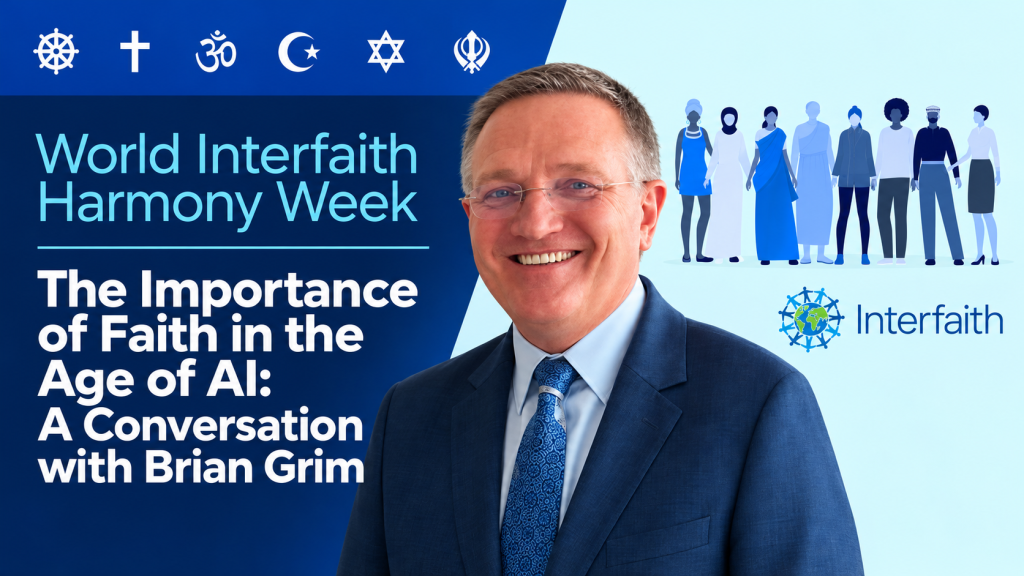
During Dell’s Interfaith event for World Interfaith Harmony Week, hosted with the support of Ihab El Ghazzawi, Dr Brian Grim, President of the Religious Freedom & Business Foundation (RFBF), shared how faith and belief help develop the very qualities organisations increasingly need: wise judgement, integrity, responsibility, trustworthiness, courage and care for others.

Faith provides a self-reinforcing cycle of character development through belief, repeated practices and communities that encourage accountability and service. These qualities shape behaviour, organisational culture, trust and long-term performance. As AI expands what organisations can do, human character becomes increasingly important in determining what they should do, making faith an overlooked organisational asset.

2026 Global Faith-Friendly Workplace ‘REDI’ Awards

13 Oct, 2026

Our newly released White Paper, Why Faith and Belief Matter in the Age of Artificial Intelligence, makes a simple but powerful point: organisations cannot improve what they cannot see. Benchmarking makes practice visible. It helps leaders identify strengths and gaps, and it creates a basis for learning and continuous improvement.

That is exactly what the Faith Friendly Workplace REDI Index is designed to do. It recognises organisations creating meaningful, practical conditions for people of different faiths and beliefs to contribute fully at work.

Today, we are proud to celebrate two outstanding global leaders.

Salesforce is recognised as the leading global faith-friendly workplace among AI and CRM organisations on the 2026 REDI Index. In a sector shaping the future of work, Salesforce is showing that innovation, human dignity, and respect for faith and belief can advance together.

MSD is recognised as the leading global faith-friendly workplace among biopharmaceutical organisations. In a field dedicated to human health and wellbeing, MSD is demonstrating a powerful commitment to dignity, inclusion, and the whole person.

Please join us in congratulating Salesforce and MSD. Their leadership sets an inspiring global benchmark for workplaces where faith and belief are respected, welcomed, and able to contribute with confidence.

The Overlooked Source of Human Capability and Character

8 Oct, 2026

Why Faith and Belief Matter in the Age of Artificial Intelligence

A Board Paper on Human Character, Corporate Governance and Long-Term Value

Executive Summary

As artificial intelligence increases organisational power, it is changing the balance between competence and character. AI can perform or augment tasks once carried out by people, but it cannot assume responsibility, determine purpose or exercise judgement on an organisation’s behalf. As AI expands what organisations can do, the character of those deciding what they should do becomes more consequential.

Religion or belief belongs on the Board agenda because, for many people, it is an important and frequently overlooked source of character. Organisations depend on wise judgement, integrity, responsibility, trustworthiness, courage, stewardship and care for others. They do not create these qualities from scratch. They are formed and renewed through families, communities, education, experience, service and traditions of religion or belief.

In this paper, “religion or belief” means religious and non-religious worldviews that shape meaning, purpose, identity and responsibility. Around half the UK population identifies with a religion; major global estimates put affiliation at between three-quarters and nearly nine in ten people worldwide. For many, the influence is lived through belief, behaviour and belonging: frameworks of meaning, repeated practices, and communities that offer example, support and accountability. It is not merely a demographic label or an accommodation issue.

Character is expressed in behaviour, and repeated behaviour becomes culture. Strong cultures support trust, collaboration, adaptability and long-term performance; poor cultures put reputation, trust and enterprise value at risk. Leading companies already declare priorities — especially innovation, integrity and people focus — that depend on character to become real. Character becomes organisational capability when it is translated through leadership, culture, management practice, learning, policies, systems and accountability. The case studies show that this is already happening through multiple pathways.

FTSE 100 practice is established but uneven: 42 companies show emerging, developing or leading practice; 58 show minimal or no visible evidence. The REDI Monitor and REDI Index give Boards ways to benchmark visible practice, assess conditions and set priorities.

Concerns about division, proselytising, competing rights, accommodation, fairness and privacy require capable governance, not avoidance: neutrality, voluntary participation, clear boundaries and protection from coercion. Boards govern conduct, culture and organisational conditions, not employees’ beliefs. No tradition guarantees good conduct. Boards should neither endorse nor assess what people believe.

Immediate Board actions

  • — Recognise the competencies and qualities of character most material to strategy, culture, risk and responsible technology, and whether religion or belief is an overlooked source.
  • — Enable employees who wish to do so to bring religion or belief into working life appropriately and voluntarily, including employee experience and managers’ confidence.
  • — Value the potential contribution of perspectives shaped by religion or belief in leadership, culture, decision-making and the responsible use of technology.
  • — Review the baseline; how conduct, accommodation, competing rights and privacy are governed; priorities; executive ownership; and Board oversight.

The aim is not to make the workplace religious. It is to recognise an overlooked source of character and govern the conditions in which it can contribute to culture, wise judgement and trusted performance. The first step is not a new programme. It is to ask the question.

Read full paper.

Will You Dare to Overcome with Kindness?

28 Aug, 2026

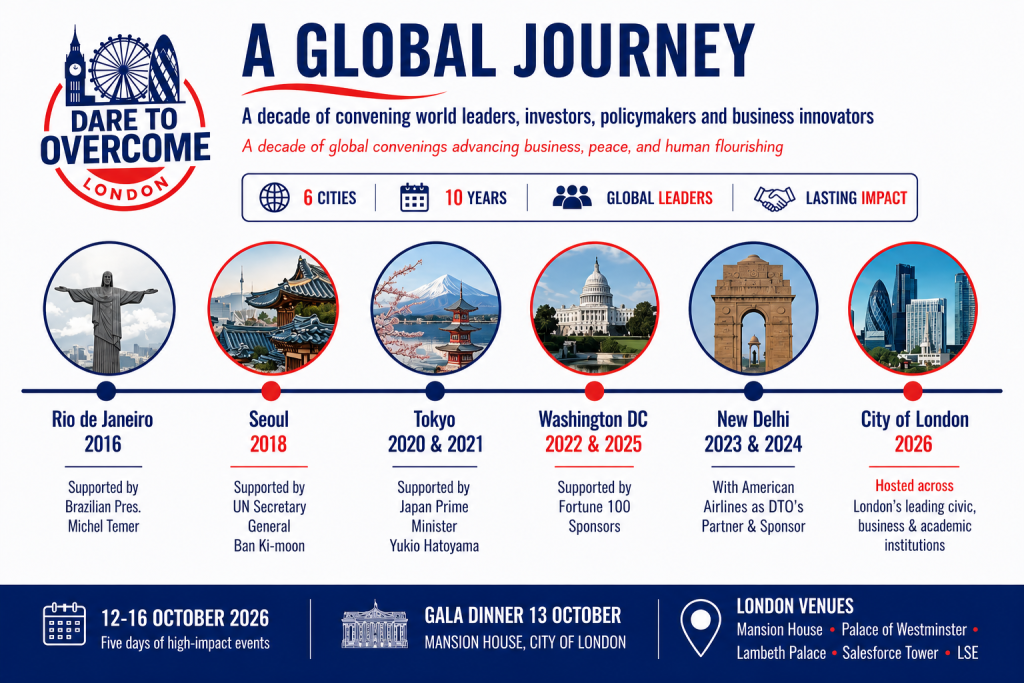
For the first time, Dare to Overcome comes to London, convening global leaders to advance peace and human flourishing.

Will You Dare to Overcome with Kindness?

12 to 16 October 2026 | London

Dare to Overcome London 2026 is a week of leadership, ideas and action bringing together global leaders from business, investment, government, academia and civil society.

The week will explore how organisations can become more human as they become more technologically powerful, with a particular focus on human dignity, responsible leadership and the Economics of Kindness.

More details below.


At a Glance

When: 12th – 16th October 2026
Where: London, UK
Who: Business, investment, government, academic, civil society and faith leaders
Theme: The Economics of Kindness
Signature event: Dare to Overcome Gala Awards Dinner at Mansion House
Ways to participate: Gala tickets and tables, individual events, invitation-only leadership gatherings, and sponsorship opportunities


The Economics of Kindness

Artificial intelligence is reshaping work, leadership and business. As technology becomes more powerful, the qualities that distinguish great organisations become increasingly human.

Trust, judgement, purpose, courage, belonging, ethical leadership and human dignity are becoming strategic assets in their own right.

The Economics of Kindness begins with a simple conviction: organisations flourish when they build trust, respect human dignity and cultivate the uniquely human capabilities that technology cannot replace.

Building on successful gatherings in Rio de Janeiro, Seoul, Tokyo, New Delhi and Washington, DC, Dare to Overcome London will bring this growing international convening to the UK for the first time.


⭐ Signature Event: Dare to Overcome Gala Awards Dinner

Mansion House | City of London | Black Tie

The Dare to Overcome Gala Awards Dinner is the flagship event of the week, bringing together senior executives, investors, Board Chairs, policymakers, academics and civil society leaders from around the world.

This founding gathering of an annual international convening focused on advancing human dignity in the workplace and marketplace is contributing to the wider journey towards the United Kingdom’s G20 Presidency in 2027.

Why Is There a Cashew Tree Named Captain America in Mozambique?

15 Aug, 2026

At Tzu Chi’s Mecuzi Farm in Mozambique, food production, skills training and resilient infrastructure are helping communities build solutions that can last.

Planting Hope, Practically

By Brian Grim

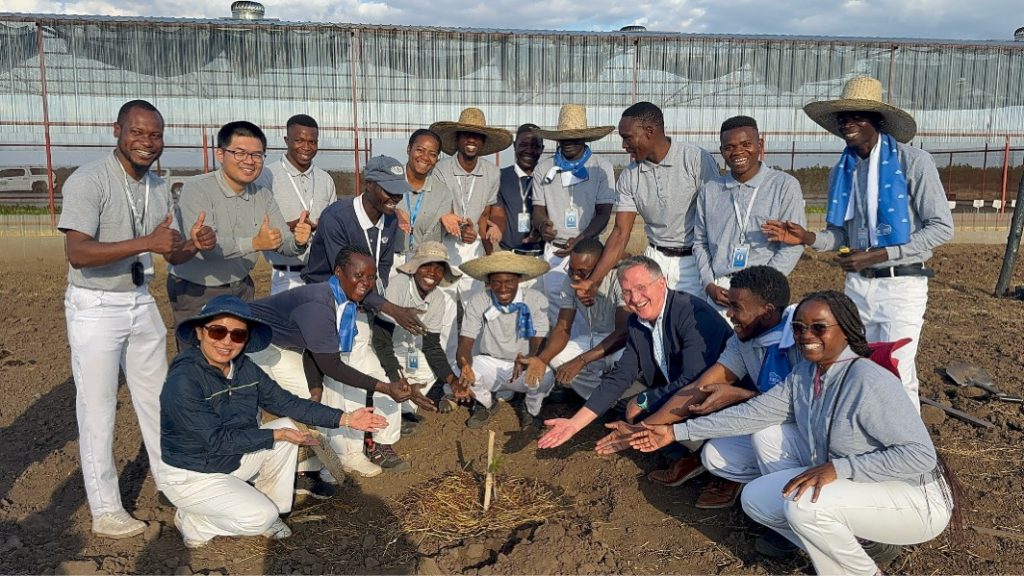
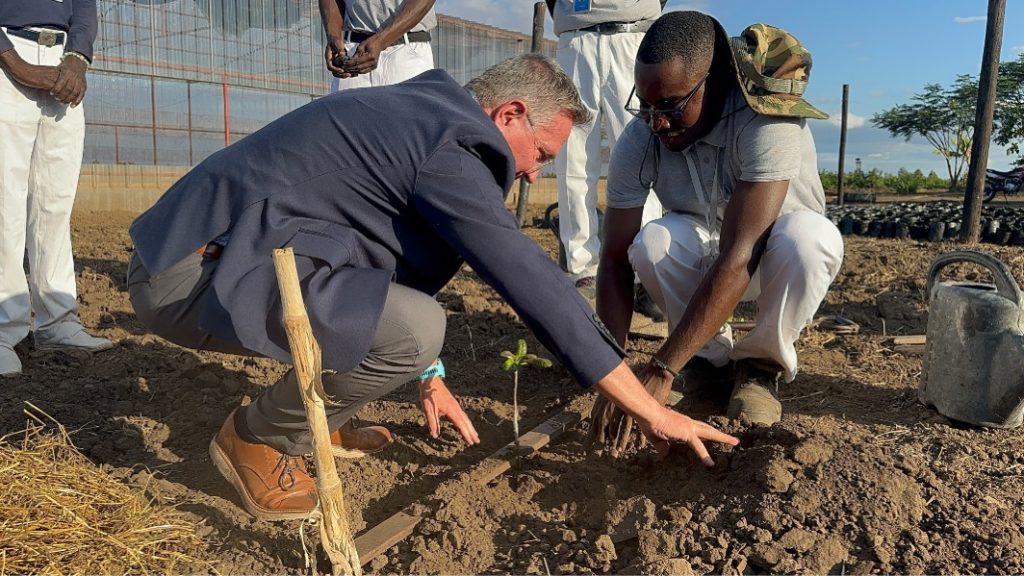
After a packed day that included joining Tzu Chi representatives as they opened a medical clinic, visited schools the foundation helped reconstruct, and saw models of resilient and affordable homes they built, how did I end up in a field planting cashew trees?

And why is one of them called Captain America?

The answer is found at Tzu Chi’s Mecuzi Farm, a roughly 200-hectare agricultural project in the interior of Sofala Province. Cultivated by local volunteers, the farm produces a variety of crops, including rice, cashews and medicinal plants. The produce helps supply local hospitals, schools and vulnerable families in the region.

The foundation’s longer-term goal is to develop the farm into a large-scale commercial venture that can help support its other charitable work in Mozambique. But the project is about more than growing food. It is also about creating skills, opportunities and greater self-reliance.

That is what I was learning throughout my visit to Mozambique with the Tzu Chi Foundation. The story was not about me, of course, but about the practical ways Tzu Chi is helping communities address the challenges within their reach.

Pictured above, I am with Tzu Chi volunteers and the Mecuzi Farm team after planting “Captain America,” a cashew tree they named during my visit and later recognized as my 19th grandchild.

Before I could plant the sapling, the farm staff showed me the best technique. They explained how to position the young tree and prepare the soil so it would have the best chance to grow.

Farm staff help the author learn the best technique for planting a cashew sapling at Mecuzi Farm.

It was a simple moment, but it reflected the larger purpose of the project. Sustainable progress depends on participation, local knowledge and the sharing of practical skills. It is not simply about bringing resources from outside. It is about helping people develop solutions they can continue to manage themselves.

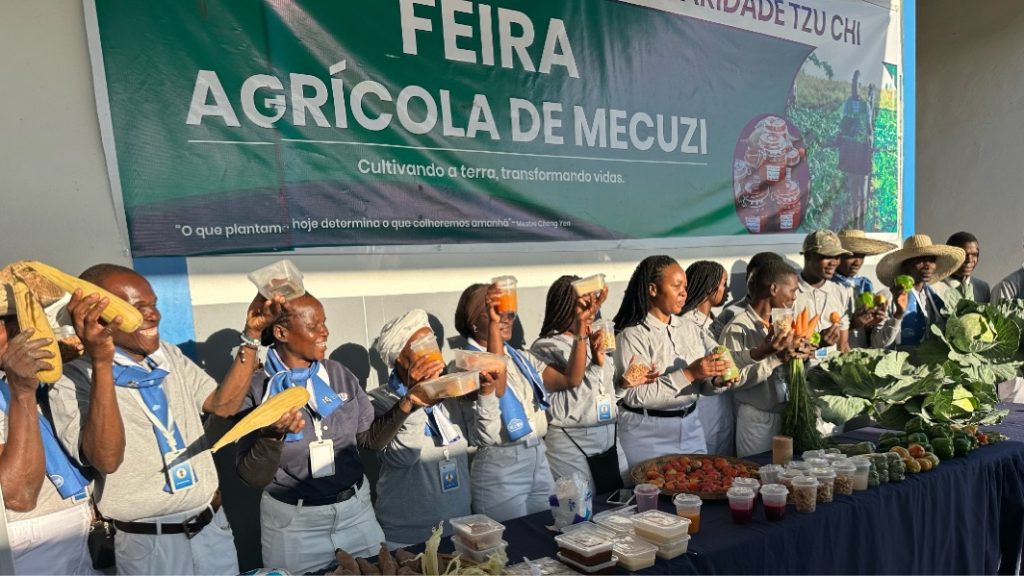
After the planting experience, the farm staff held a farmers’ market for the visiting delegation. They displayed produce from the farm and prepared food for us to enjoy, offering a tangible reminder of what the project is already producing.

Following the planting experience, Mecuzi Farm staff held a farmers’ market featuring produce from the farm for the visiting delegation.

The farm was one part of a wider program. During the visit, I also saw a medical clinic that Tzu Chi had turned over to the local government, one of 23 schools the foundation helped reconstruct after a cyclone, models of resilient and affordable homes, and a vocational school where I was invited to hand out awards.

In a nation with so many challenges, it was wonderful to see so many reasons for hope in the faces of people who are working toward solutions within their reach, rather than relying only on charity.

That may be one of the most important lessons from Tzu Chi’s work in Mozambique. Compassion is essential, especially in times of crisis. But lasting change also requires investment in people, local leadership, practical skills and systems that can serve communities over time.

Well done, Fundação de Caridade Tzu Chi Moçambique.

As for Captain America, I am looking forward to coming back to see how much the tree has grown and to count how many great-grandchildren eventually blossom from my 19th grandchild.


Tzu Chi Foundation was established in Taiwan more than six decades ago and now works in communities around the world. Its approach is guided by the principle of “Da Ai,” which the organization translates as “great love.” The idea is not limited to compassion as an emotion. It is presented as a commitment to turn compassion into action.

The organization’s work in Mozambique will be among the subjects discussed at Dare to Overcome London, taking place from 12 to 16 October 2026. Po-wen Yen, Tzu Chi Foundation’s chief executive, will share lessons from the foundation’s experience in humanitarian work and community development.

Yen moved from a senior career in Taiwan’s semiconductor industry into humanitarian work, bringing his business and management experience to the foundation’s response to poverty, disasters and other social challenges.

Tzu Chi’s work raises a broader question for charities: should success be measured only by what an organization delivers, or also by what communities are able to do for themselves afterwards?