
In Mozambique, Tzu Chi Foundation volunteers are helping families turn local challenges into practical opportunities. Their work offers a different way of thinking about charity, one that focuses not only on providing support, but also on building confidence, skills and self-reliance.
By Brian Grim
At the age of 80, Amelia cares for eight members of her family. Her elderly mother, two daughters, a daughter-in-law and three grandsons all live together in a one-room tin hut in rural Mozambique. The family also cooks outdoors and has few dependable ways to earn an income.
Like many people in her community, Amelia has faced poverty with limited resources and little outside support. When local volunteers from the Tzu Chi Foundation began working with her and her family, they did not simply offer short-term assistance. They encouraged the family to consider what they could do together to improve their situation.
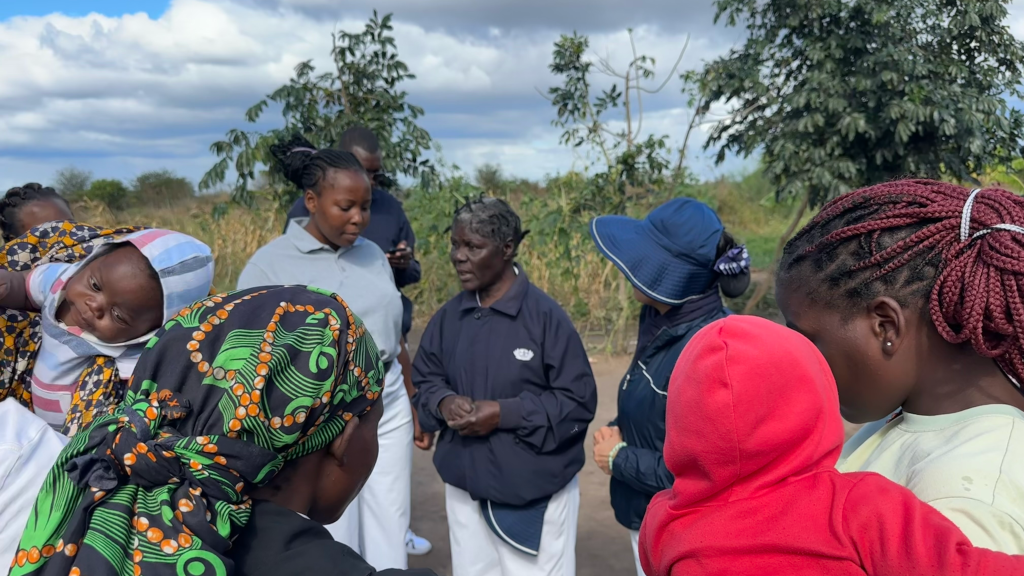
In the photograph above, Amelia shares her experience with family members and visitors. The moment reflects how her personal journey has become part of a wider conversation about resilience, dignity and community-led solutions.
The photograph below shows Amelia leading a weekly spiritual values lesson for community members. The sessions bring together people from different religious backgrounds who are united by practical principles, including love of neighbor, compassion and responsibility toward the wider community.
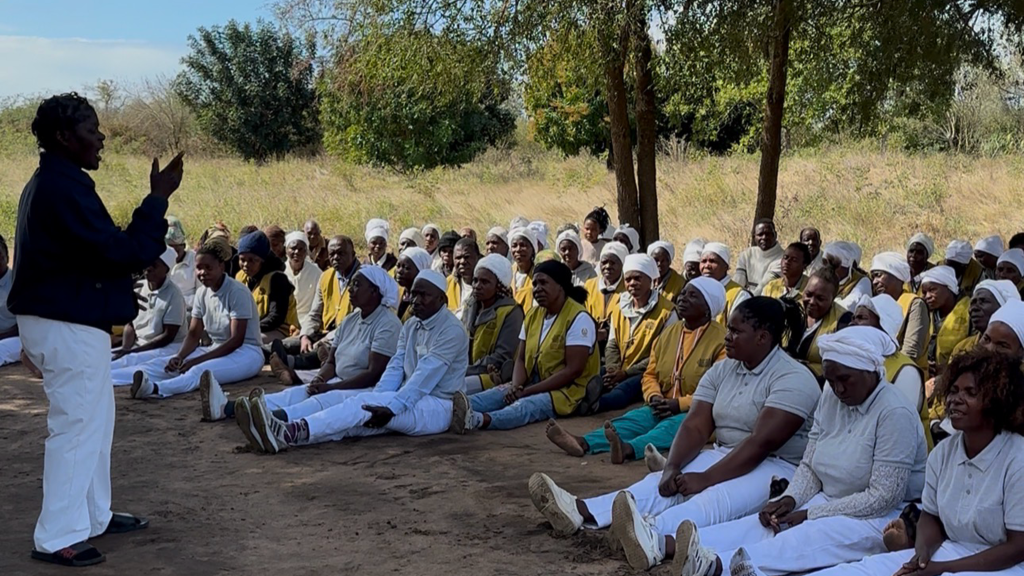 Amelia leads a weekly spiritual values lesson for community members in Mozambique. People from different religious backgrounds take part, putting principles such as love of neighbor, compassion and self-reliance into practical action.
The gatherings are not presented as an effort to replace one faith with another. Instead, participants draw on shared ethical values and apply them through service, cooperation and support for their neighbors. In this setting, spiritual reflection is connected to everyday action.
One opportunity was found in materials that other people had thrown away. Amelia and her family began collecting plastic and metal for recycling, creating a small source of income from resources that were readily available in their community.
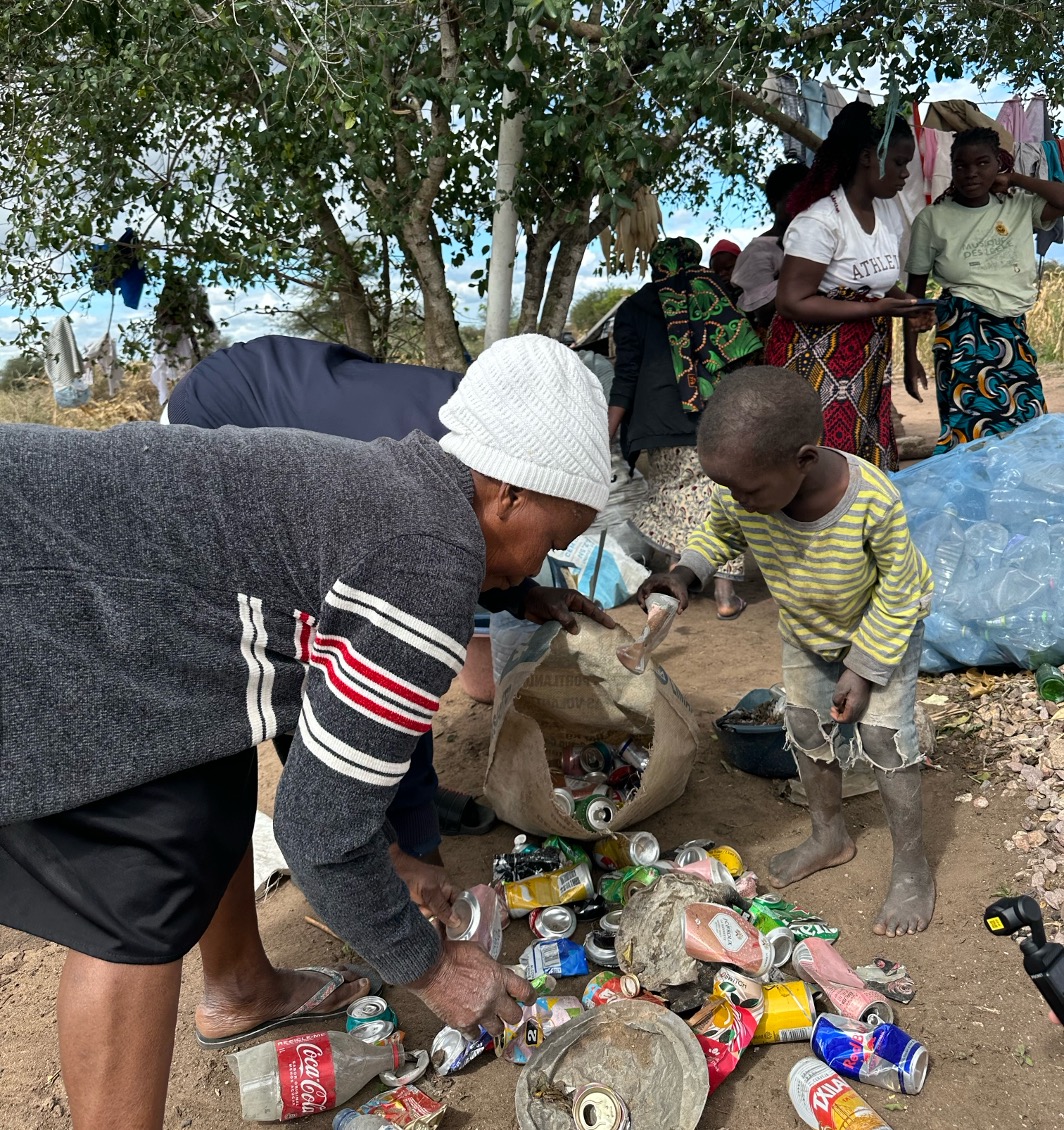
The work has not removed all of the family’s difficulties. It has, however, given them a practical way to contribute to their own livelihood. Amelia has also become a volunteer, helping other families identify opportunities and find ways to support one another.
Her experience reflects an important principle in Tzu Chi’s approach to humanitarian work. Charity is not only about responding to immediate needs. It can also help people develop the confidence, skills and relationships needed to address those needs themselves.
This may offer a useful lesson for the wider charity sector. In communities facing long-term poverty, outside organizations cannot solve every problem by bringing in money, materials or expertise. Sustainable progress often depends on working alongside local people, recognizing their knowledge and supporting solutions that fit their circumstances.
Tzu Chi’s work in Mozambique extends beyond household livelihoods. In areas where poorly built homes are repeatedly damaged or destroyed by severe storms, the foundation has worked with local experts to develop more resilient housing designs using locally available materials.
The purpose is not simply to rebuild after each disaster. It is to reduce the damage caused by the next one. This is the same practical philosophy seen in Amelia’s story: understand the challenge, make use of available resources and develop a solution that can be sustained locally.
The foundation’s community work is also connected to its spiritual practice. Volunteers meet weekly to reflect on values, study the teachings associated with the organization’s founder, Master Cheng Yen, and organize activities to serve their neighbors. The participants come from different religious backgrounds, but their involvement is grounded in shared commitments to compassion, service and human dignity.
For these volunteers, spiritual commitment is expressed through practical action. Love of neighbor means offering help, sharing knowledge and contributing to the wellbeing of the community. Self-reliance does not mean facing hardship alone. It means building the skills, relationships and confidence needed for families and communities to shape their own futures.
Tzu Chi Foundation was established in Taiwan more than six decades ago and now works in communities around the world. Its approach is guided by the principle of “Da Ai,” which the organization translates as “great love.” The idea is not limited to compassion as an emotion. It is presented as a commitment to turn compassion into action.
The organization’s work in Mozambique will be among the subjects discussed at Dare to Overcome London, taking place from 12 to 16 October 2026. Po-wen Yen, Tzu Chi Foundation’s chief executive, will share lessons from the foundation’s experience in humanitarian work and community development.

Yen moved from a senior career in Taiwan’s semiconductor industry into humanitarian work, bringing his business and management experience to the foundation’s response to poverty, disasters and other social challenges.
Tzu Chi’s work raises a broader question for charities: should success be measured only by what an organization delivers, or also by what communities are able to do for themselves afterwards?
Amelia’s story suggests that the most lasting form of assistance may be the kind that does not leave people permanently dependent on assistance. By helping her family recognize the value of discarded materials and the strength of working together, local volunteers helped turn a daily challenge into a source of income and service.
Her role as a teacher and volunteer adds another dimension to that story. She is not only applying these principles in her own life. She is helping others explore how compassion, cooperation and self-reliance can be practiced in their own families and neighborhoods.
That may be the wider lesson of Tzu Chi’s work in Mozambique. Effective charity is not only about giving people something. It is also about bringing people together across religious and social differences, helping them recognize shared values and supporting them as they build solutions for themselves.