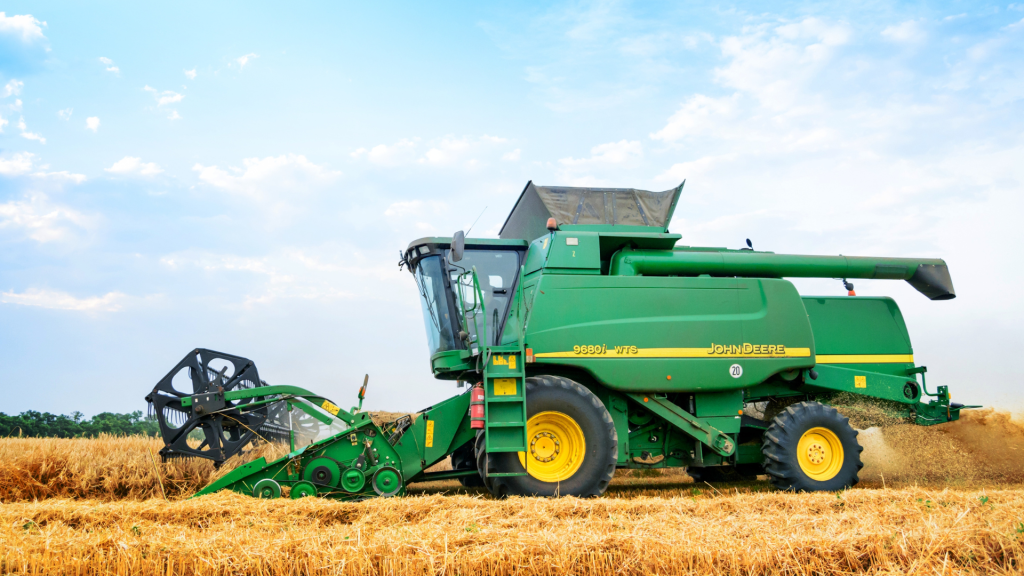
John Deere Combine Harvester Harvesting Wheat in Field, Stephan Botezatu, Zaporizhzhya, Ukraine, July 28, 2015 | Canva
Brian Grim
President, Religious Freedom & Business Foundation
There are moments when the workplace becomes a mirror of the wider culture — its tensions, its debates, its uncertainties. We seem to be living in one of those moments now.
Companies across the country are reexamining what it means to foster a healthy workplace culture. Leaders are weighing how best to support employees, how to respond to shifting expectations, and how to keep their organizations grounded amid competing pressures.
In the middle of all this, it is easy to miss something important: the most fundamental human need in the workplace has not changed.
People want to be seen. They want to be respected. They want to belong.
And one of the most overlooked aspects of belonging in modern corporate life is faith and belief. This includes employees of all faiths, as well as those with no religious affiliation.
Religion is not a niche concern. For billions of people around the world — and for millions of employees in the United States — faith is central to identity and purpose. It shapes values, commitments, and community. Yet many workplaces have never quite known what to do with faith. Too often, it is treated as something best kept invisible, precisely because leaders fear it will introduce complexity or conflict.
But invisibility is not neutrality. When employees feel they must hide a core part of who they are in order to be accepted, something essential is lost. Trust frays. Engagement weakens. Culture becomes thinner.
This is why religious inclusion is not a peripheral workplace issue. It is a profound opportunity for leadership.
A recent Law.com article by journalist Chris O’Malley brings this into sharp focus. He reports on a shareholder proposal now facing John Deere, one of America’s most recognizable companies. The proposal calls on the company to allow faith-based employee resource groups, arguing that employees of all beliefs deserve the same ability to find community and support in the workplace.
What makes this situation especially striking is that it emerges from an unexpected place. O’Malley notes that some of the loudest critics of corporate DEI initiatives are now pressing for religious inclusion — not as ideology, but as practical good sense.
And here is the deeper irony: the broader political backlash surrounding DEI has had unintended consequences, sweeping faith-based inclusion and religious employee communities into the category of “collateral damage,” even though they address a distinct and foundational dimension of human identity.
This is not an isolated case. It reflects a broader reassessment of what belonging truly means in the workplace.
That should give leaders pause.
Because faith inclusion is not about partisan arguments. It is not about endorsing religion, or privileging one belief over another. It is about something far simpler, and far more durable: the dignity of the person.
A faith-and-belief-friendly workplace is one where employees know they can request reasonable accommodation without fear. It is one where no one is marginalized because of what they believe, or do not believe. It is one where managers have clarity, policies are fair, and belonging is not reserved for some but extended to all.
In short, it is a workplace that takes people’s foundational identities seriously.
Sometimes it’s as simple as accommodating a holy day, allowing space for voluntary employee faith communities and prayer, or equipping managers to handle faith and belief respectfully.
At the Religious Freedom & Business Foundation, this is the heart of our mission. We work with companies to build cultures where people of every faith and belief can thrive, and where religious inclusion is recognized not as a risk, but as a strength.
The question for leaders is not whether faith belongs at work — but whether they will approach it intentionally, consistently, and fairly.
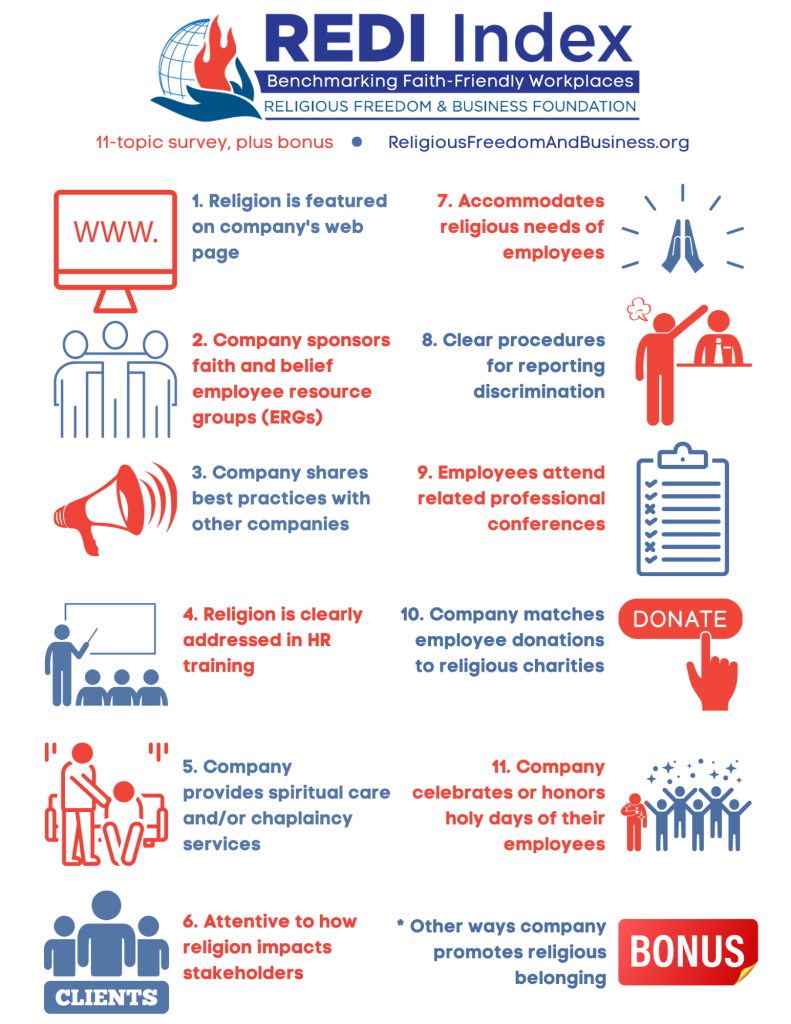
That is why we created the Faith-Friendly Workplace REDI Index https://religiousfreedomandbusiness.org/redi.
Benchmarking may sound technical, but its purpose is profoundly human. It gives organizations a way to move beyond slogans or assumptions and instead measure how effectively they are creating an environment of fairness and respect around faith and belief.
The truth is simple: what gets measured gets improved. And what gets improved strengthens not only profits and workplaces, but the communities and societies they touch.
Our 2026 Faith-Friendly Workplace REDI Index survey is now open, and I encourage business leaders, HR teams, and culture champions to participate. This is a constructive step forward, one that signals to employees that they are not expected to leave an essential part of themselves — for many what they consider the best part of themselves — at the door when they come to work.
In a time when so many workplace conversations feel fraught, respectful faith and belief inclusion with clear policies and guidelines offers a steadier path, one grounded not in politics, but in dignity, freedom, and the practical wisdom of building cultures where people truly belong.
Religious inclusion should not be an afterthought. And it certainly should not become collateral damage.
It is, quite simply, good for business, good for workers, and good for society.
I invite companies of every size and sector to benchmark where they stand and join a growing community of employers leading on faith-and-belief inclusion.